Cicer Milkvetch – Astragalus cicer L.
Family Fabaceae
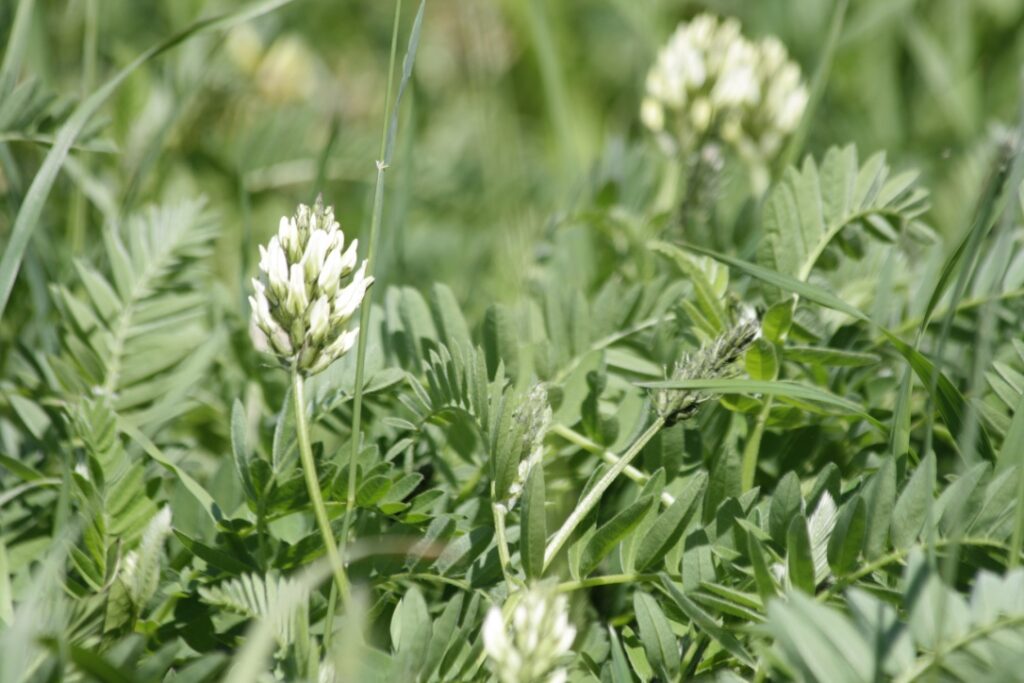
Photo Gallery
Whole Plant
Photos coming soon!
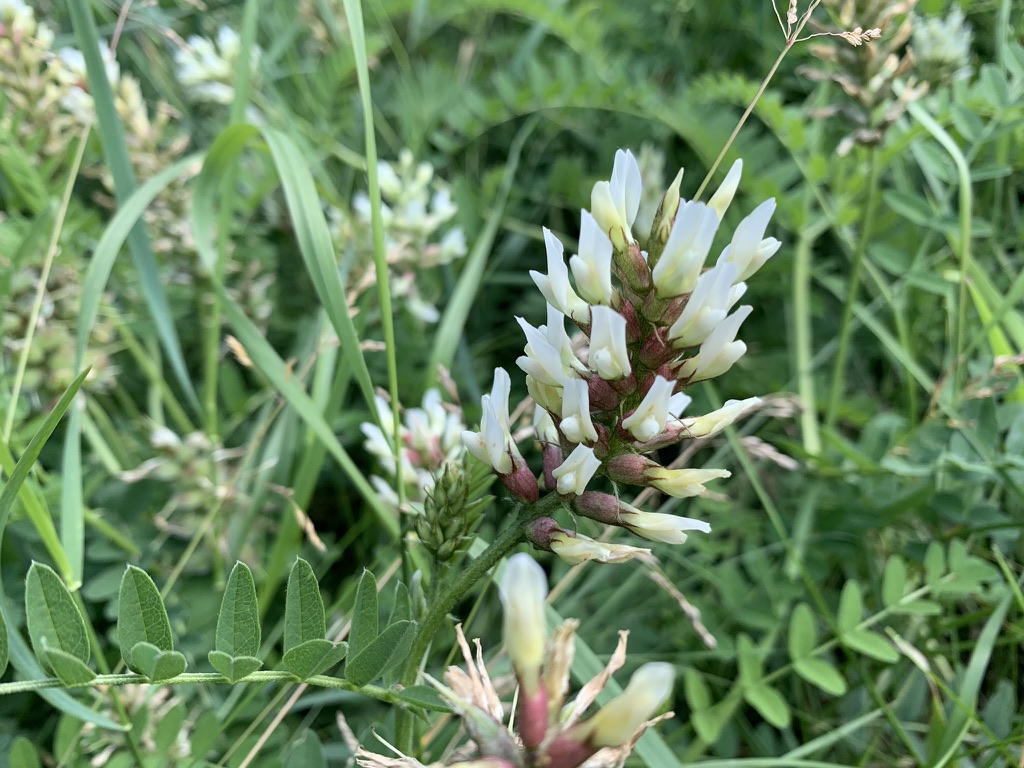
Flowers/Inflorescences
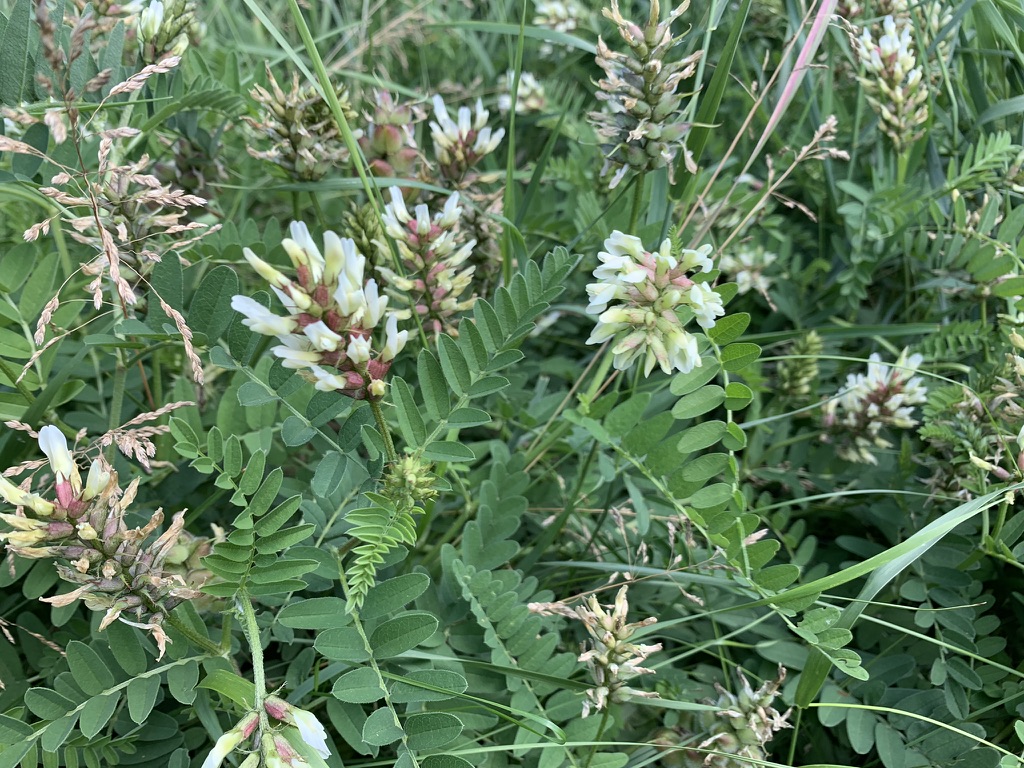
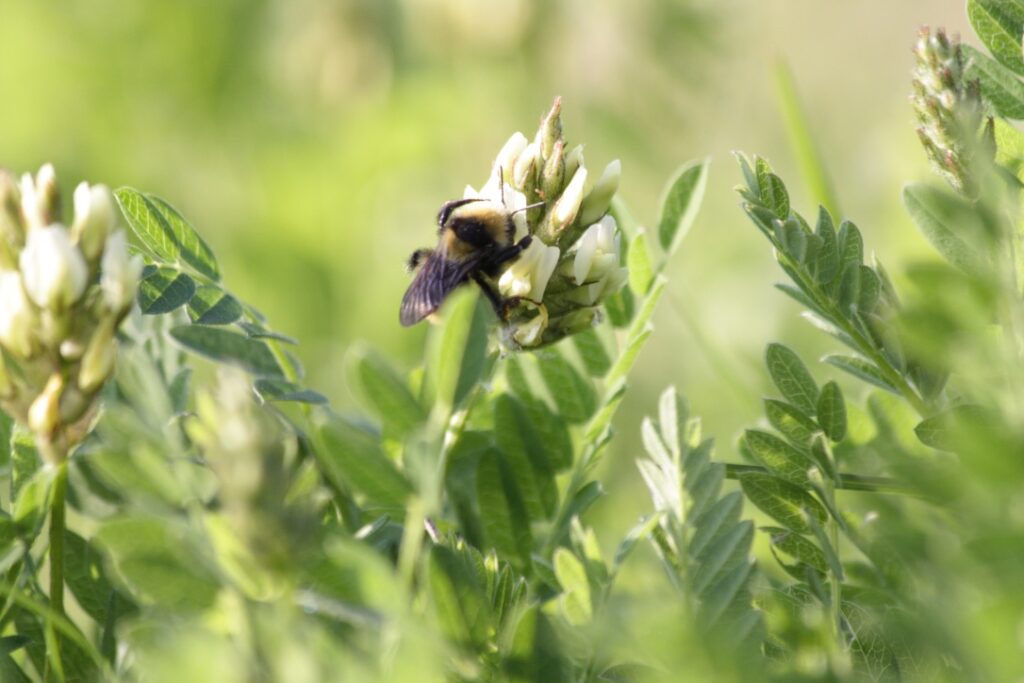
Leaves
Photos coming soon!
In the Vegetative Stage
Photos coming soon!
Seed-set or Maturity
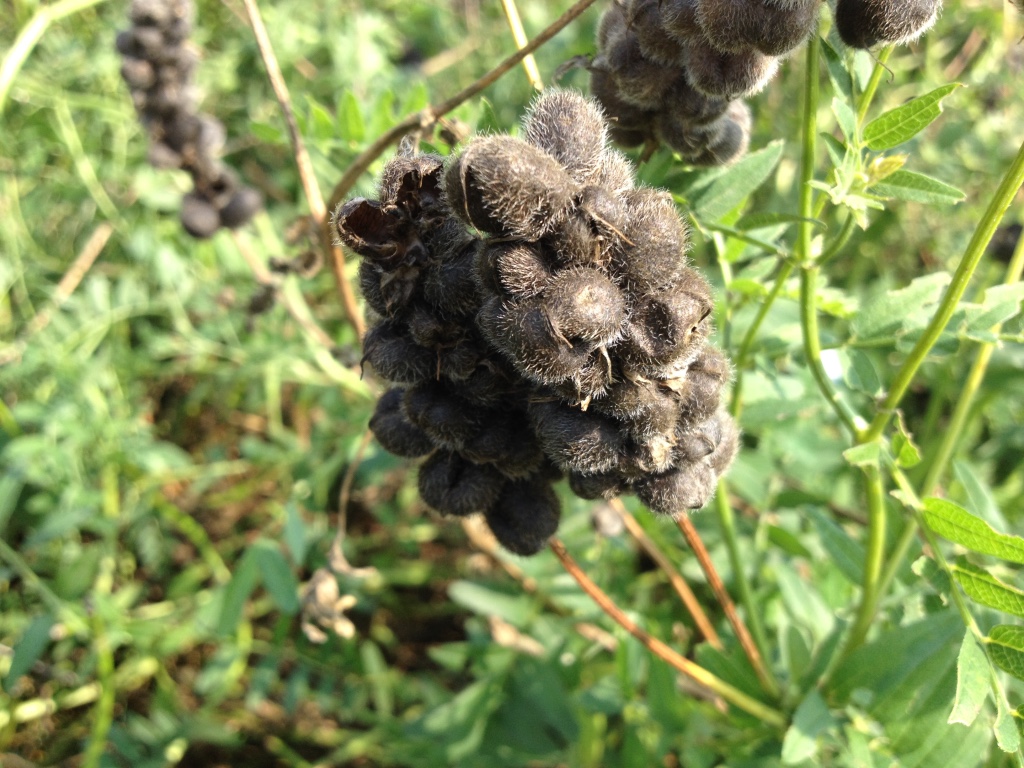
More photos coming soon!
Origin & Status
- Native or non-native to Western Canada? Non-native
- If non-native, where is it considered a native species? Europe, from East European Russia, westward to Spain, and south to Turkey.
- Is this plant generally considered a nuisance weed or not? Not usually. It is primarily considered a forage species for livestock. See more in “Interesting Notes” below.
- Common or rare? Common.
Dichotomy-like Description
Growth Habit
- Monocot or dicot? Dicot.
- Erect, prostrate, creeping, or climbing? Somewhat erect, more or less prostrate.
- What is its life cycle? Perennial.
Overall Height
- Young plants grow up to 3 ft (90 cm) Stems on older plants grow 4 to 10 ft (121 to 305 cm) long.
Stem Characteristics
- Solitary stem or bunching together? Bunching. Weak stems collapse amongst each other in older plants.
- Pithy or hollow? Hollow.
- Square, round, or triangular? Rounded to somewhat square.
- Clear or milky sap? Clear.
Rooting Type
- Stolons or rhizomes present? Rhizomes present.
- If yes, are stolons/rhizomes short or long? Long, creeping.
- Fibrous roots or taprooted? Taprooted with fibrous roots, especially in younger plants.
Leaf Arrangement on the Stem
- Are leaves arranged opposite, alternate, whorled or as basal rosette? Alternate.
- How are leaves attached to the stem? Petiole or stem.
- Axial leaves present? No.
- Stipules present? Yes.
Leaf Characteristics
Simple or Compound leaves? Compound.
- (If Compound) What type of division? Pinnately divided.
- (If Compound) How many leaflets per leaf? Between 10 to 13 pairs per leaf plus one terminal
- What is its (including leaflets) shape? Lanceolate-elliptic or oblong; apex is obtuse, apiculate, or acute.
- Leaf edges smooth or toothed? Smooth, apex obtuse, apiculate or acute
- If toothed, is it fine or coarse or other? N/A
- Are the leaves eared? No.
- Do they have auricles? No.
- What is their size? Leaves 2 to 10 cm long; leaflets 5 to 35 mm across.
- What is the veining characteristics? Prominent midrib impressed
- Is there any colouration to note? No.
What other characteristics are there of note? Leaves themselves 2 to 10 cm long, leaflets 5 to 35 mm across. Surfaces are strigulose (covered in fine hairs), sometimes smoother on the top surface.
Inflorescence Type
Raceme, panicle, cyme, spike, umbel, corymb, twinned, singular, etc.? Raceme.
- Length of flower cluster (if applicable): 3.5 to 11 cm (1.4 to 4.3 inches)
- Other characteristics? (6) 10-30 flowered; flowers ascending in bloom.
Flower Colour
- What colour are the petals? Creamy white to light or pale yellow.
- What colour are the sepals or calyx? Green to pinkish-red as flowers mature; dark-tipped at base of flower.
- What colour are the stamens? Light green to white.
Flower Size
- 12 mm (~1/2″) – pea-sized, to
- 18 mm (~3/4″) – [Cdn] dime-sized (very rarely A. cicer flowers get to 18 mm; maximum is 16.5 mm)
Flower Composition
Regular, composite, irregular, or pea-like? Pea-like.
(If pea-like) what is the shape of the corolla? Tube-like with banner flag-like.
- Are wing, keel and banner larger, smaller, or more or less visible than each other? Banner more visible and larger than keel, which is more recessed; asympetalous (petals are not fused together).
(If pea-like) what is the shape of the calyx and its parts? Tube is subcylindric, its lobes triangular-acuminate.
Any hair-like structures on flower parts? Calyx is strigulose.
Fruits & Seeds
What type of fruiting body does this specie produce? Legume seed pod.
- What is its size? 6 to 14 mm x 5 to 10 (12) mm
- What is the size of each individual seed? 2 mm wide
- What is its shape? Obovoid to subglobose
- What is the shape of each individual seed? Flat, subglobose-bean shaped.
- Are there any other features to note? Legumes ascending to spreading; Light greenish-yellow and fleshy turning to black and leathery (or stiffly papery) with maturity. Seeds detach within and rattle. Pod inflated but firm and hardly bladdery.
Where to Find This Species
What ecoregions and habitats does this plant most commonly occur in? A. cicer is found in most ecoregions of Western Canada, particularly in the Aspen Parkland and Prairie Ecoregions, with some plants also found in the Foothills Ecoregion and northward in the Mixed Boreal Ecoregion. It is also common in tame forage stands on farms and ranches for grazing or for hay production. Its tendency to self-establish from seeds and stolons allows it to spread and invade native habitats, forming big clumps of green leafy material admong drier, brown plants (particularly noticeable during droughts). It will establish on dry prairie where there is sufficient water, and has a taproot that can reach down deep into the soil to capture water.
What plant community is this plant found in, or occupies as the dominant species? This plant is found mostly in open grasslands, tame pasture stands, tame haystands, in ditches, along roadsides, along forest edges, and even within brush and thickets. Since it is an invasive non-native (some are beginning to call it a weed, and rightly so), it’s tendency to spread due to the attraction of its “rattles” by people allows it to further spread and take over native flora.
Which states/provinces can this species be found in? It is introduced in Alberta, British Columbia, Saskatchewan, Manitoba, Ontario, Quebec, Yukon Territory; Alaska, California, Colorado, Idaho, Indiana, Missouri, Minnesota, Montana, Nebraska, Nevada, New Mexico, Oklahoma, Utah, Wyoming, and Washington State.
When to Find Blooms/Inflorescences
What time of year is this plant most likely to bloom? What seasons to expect, and what months of the year? Typically flowers from June to September, which is from early summer to early fall.
Is this Species Poisonous or Edible?
Is this species is edible or does it have any poisonous or toxic properties that you need to be aware of? This species is edible for livestock and wildlife, therefore not known to be poisonous or toxic.
Synonyms & Other Names
Other scientific names this plant is or has historically been known by:
The homotypic synonyms:
- Astragaloides cicera (L.) Moench
- Astragalus cicer var. major DC.
- Cystium cicer (L.) Steven
- Glaux astragaloides Medik.
- Tragacantha cicer (L.) Kuntze
The heterotypic synonyms, as follows:
- Astragalus cicer var. angustifolius
- Astragalus cicer var. dieffenbachii
- Astragalus cicer var. heldaviensis
- Astragalus cicer f. heldaviensis
- Astragalus cicer var. microphyllus
- Astragalus cicer var. pseudocicer
- Astragalus cicer var. speciosus
- Astragalus cicerinus
- Astragalus heldaviensis
- Astragalus microphyllus
- Astragalus microphyllus
- Astragalus mucronatus
- Astragalus pseudocicer
- Cystium pseudocicer
- Tragacantha mucronata
Other common names this plant has been known by (English only):
- Chickpea Milkvetch
What Other Species Can this be Confused With?
What other species may you confuse this with? No other species is currently known have the black “rattles” like A. cicer, nor has the large composite leaves or creeping-like, decumbent, sprawling growth like this species.
What are any details to help distinguish this species from others? N/A
Interesting Notes
Is there any value of this plant for grazing herbivores, both domesticated and wild? Yes!
It originally came over in the eary 20th century as a forage resource for cattle, sheep and horses.
Ranchers argue about its palatability for livestock. Some say that their animals will eat everything around this plant except A. cicer itself, others will say that their cattle will go for this species everytime and flatten it out while grazing other plants (I have seen the latter, where cattle [Hereford & Hereford-cross cow-calf pairs] have grazed it to the ground and almost ignoring other plants around it.). Palatibility may be due to soil moisture availability and other environmental stresses, as well as the needs of the animals themselves. Cicer milkvetch is rich in proteins (20 to 30% crude protein value), calcium, magnesium and other essential nutrients making it an ideal plant for lactating cows or growing weaned cattle to graze.
Cicer milkvetch is a non-bloating legume. The characteristics that make it non-bloating is that the cell walls are more difficult to break down in the rumen than bloat-tending legumes like alfalfa and clover. Rumen microbes, in other words, need to work harder to break down the cell walls to access the “goodies” within, thus slowing down digestibility rate. In comparison, alfalfa has a very high digestibility rate, making it dangerous to ruminants like cattle and sheep to bloat.
Wildlife like deer, moose, and elk may feed on cicer milkvetch as well, eating the leaves and flowers.
What pollinators love to visit (if forb or flowering shrub)? Pollinators such as native bumble bees, skippers, and other butterflies like visiting these flowers for their nectar.
Is it commonly used for reclamation purposes? No. A few Alberta rural counties consider it an invasive and noxious weed, but not many due to its important agricultural use for livestock feed and grazing.
Links for More Information
- iNaturalist – https://www.inaturalist.org/taxa/75633-Astragalus-cicer
- Saskatchewan Wildflowers – https://www.saskwildflower.ca/nat_Astragalus-cicer.html
- Minnesota Wildflowers – https://www.minnesotawildflowers.info/flower/chickpea-milk-vetch
- Montana Field Guide – https://fieldguide.mt.gov/speciesDetail.aspx?elcode=PDFAB0F220
- USDA Plants Profile (or similar) – https://plants.sc.egov.usda.gov/DocumentLibrary/plantguide/pdf/pg_asci4.pdf
- E-flora BC – https://linnet.geog.ubc.ca/ShowDBImage/ShowStandardMobile.aspx?index=91448
- Alberta Biodiversity Monitoring Institute – https://abmi.ca/species/astragavbg ñ““y6rtgfhgy3eweerdlus-cicert