Marsh Grass-of-Parnassus – Parnassia palustris L.
Family Celastraceae
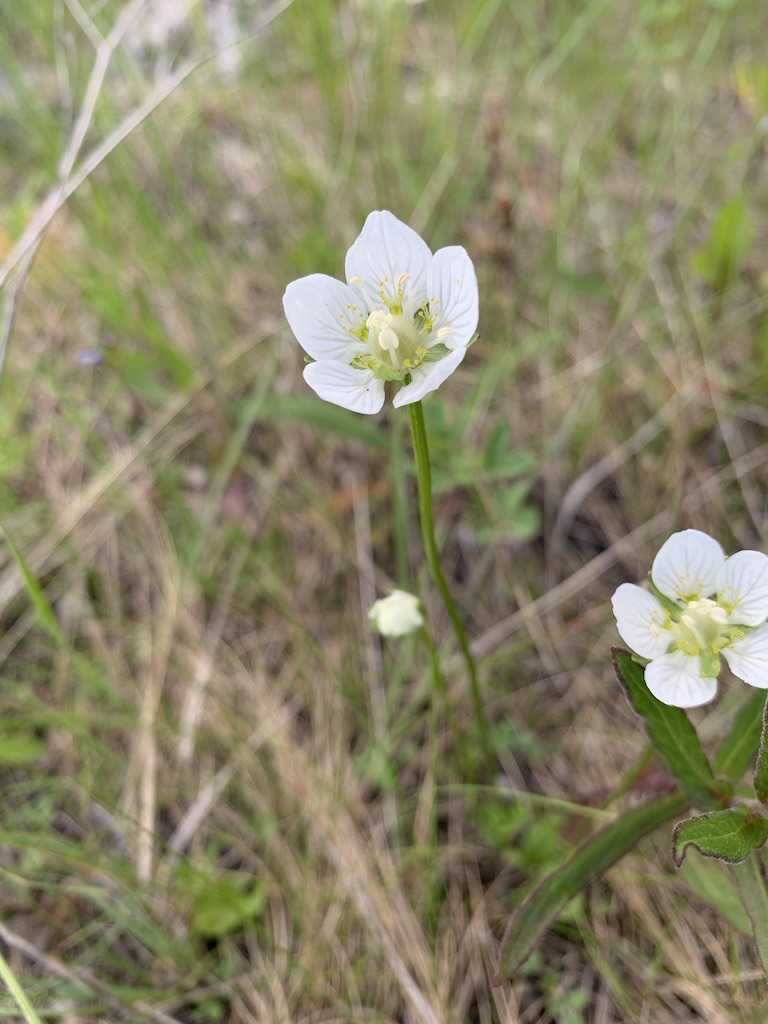
Photo Gallery
Whole Plant
Flowers/Inflorescences
Leaves
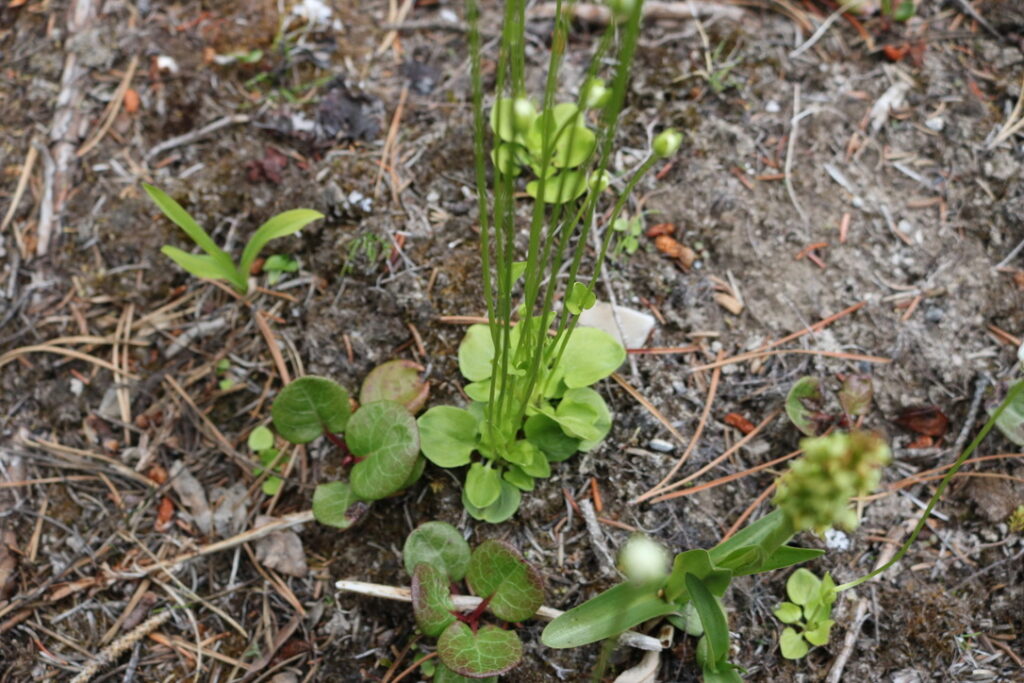
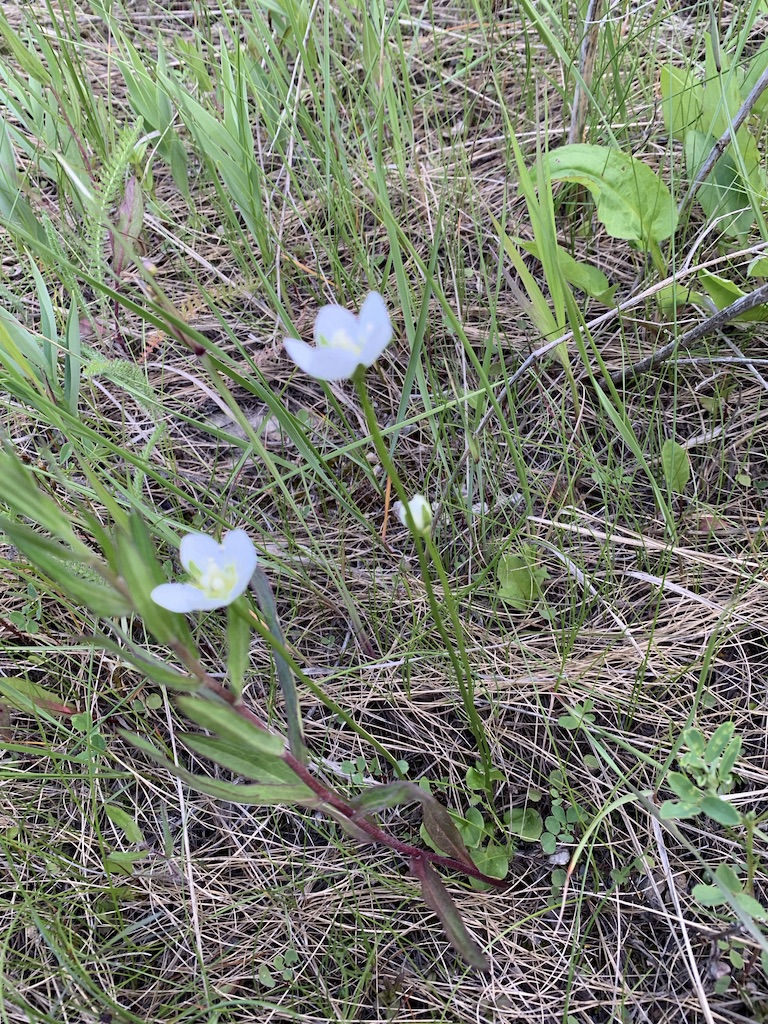
In the Vegetative Stage
Photos coming soon!
Seed-set or Maturity
Photos coming soon!
Origin & Status
- Native or non-native to Western Canada? Native.
- If non-native, where is it considered a native species? N/A
- Is this plant generally considered a nuisance weed or not? No
- Common or rare? Common.
Dichotomy-like Description
Growth Habit
- Monocot or dicot? Dicot.
- Erect, prostrate, creeping, or climbing? Erect, leaves prostrate in vegetative stage.
- What is its life cycle? Perennial.
Overall Height
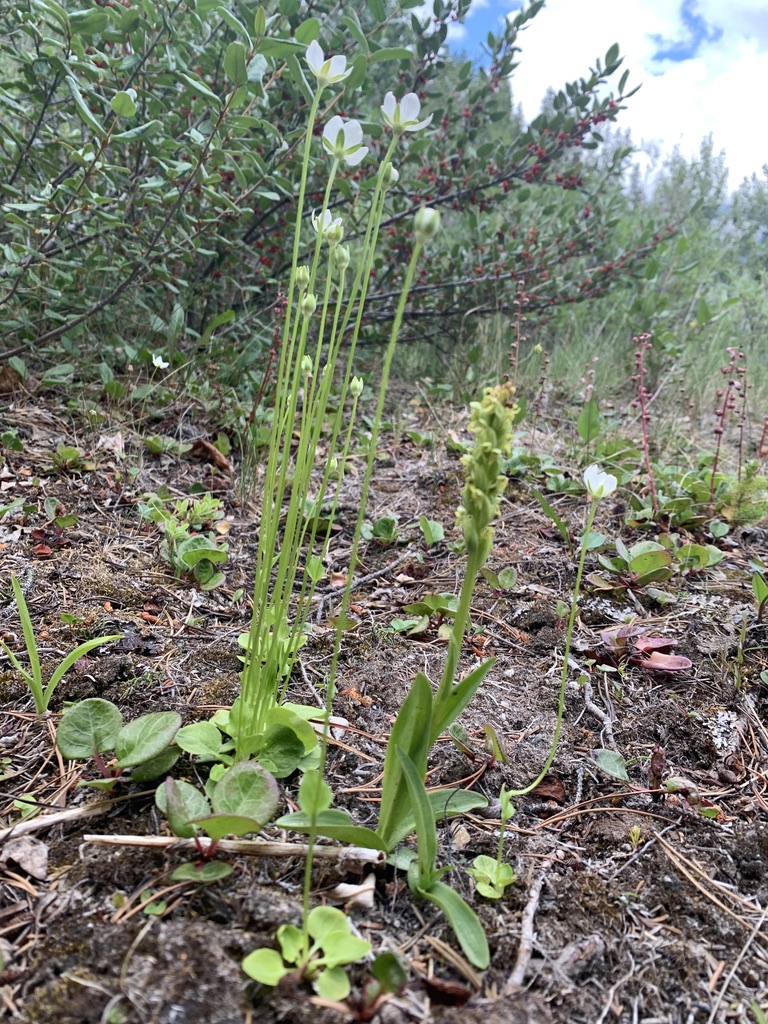
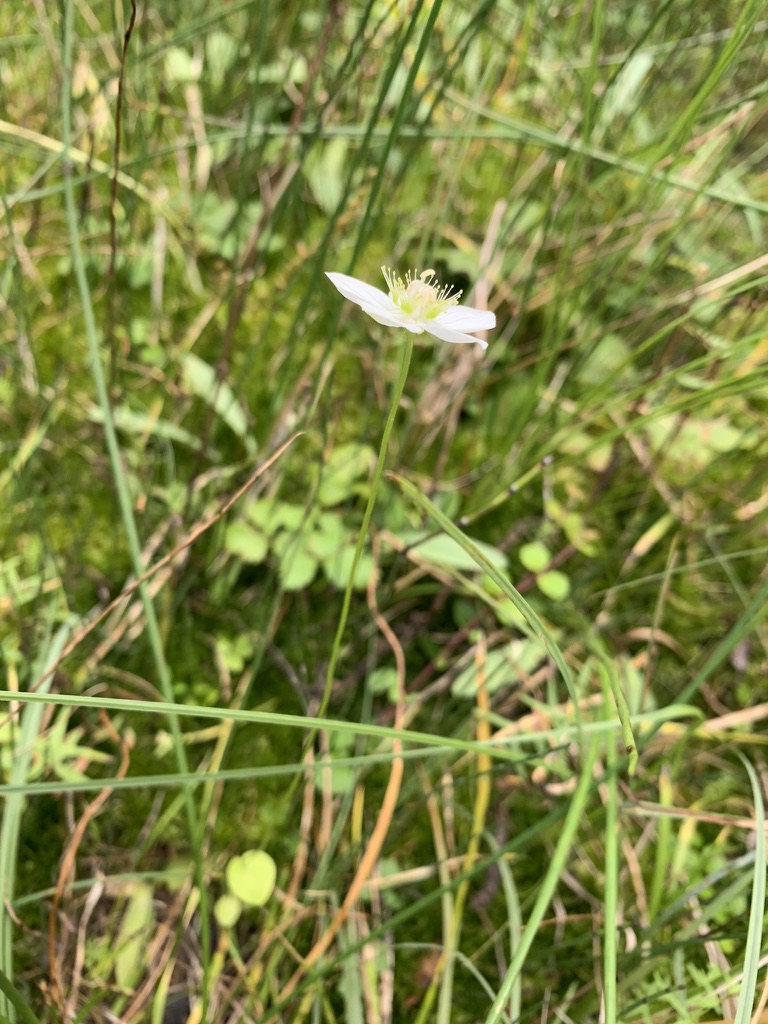
- 10 to 45 cm (4 to 18 inches)
Stem Characteristics
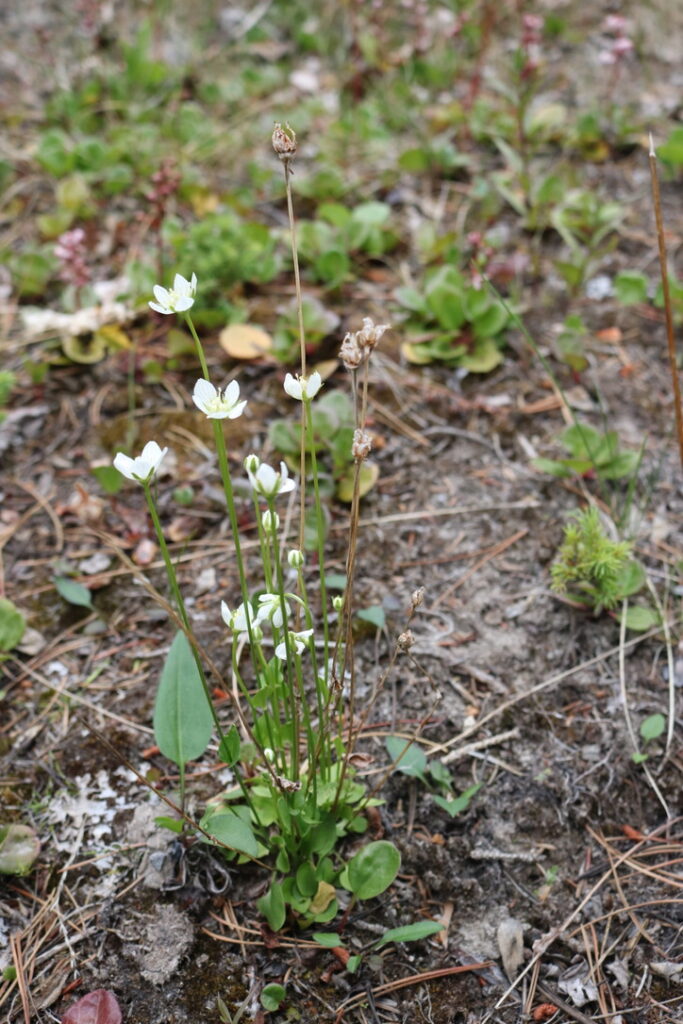
- Solitary stem or bunching together? Single stem, multiple plants found together appear bunching.
- Pithy or hollow? Pithy
- Square, round, or triangular? Round
- Clear or milky sap? Unknown.
Rooting Type
- Stolons or rhizomes present? None, from a rootstock.
- Fibrous roots or taprooted? Mostly fibrous.
Leaf Arrangement on the Stem
- Are leaves arranged opposite, alternate, whorled or as basal rosette? Basal rosette
- How are leaves attached to the stem? Petiolate.
- Axial leaves present? Yes, singular; usually on proximal half of stem.
- Stipules present? No.
Leaf Shape & Type
Simple or Compound leaves? Simple.
- (If Compound) What type of division? N/A
- (If Compound) How many leaflets per leaf? N/A
- What is its (including leaflets) shape? Ovate to subobiculate, base is rounded to cordate.
- Leaf edges smooth or toothed? Smooth.
- If toothed, is it fine or coarse or other? N/A
- Are the leaves eared? No.
- Do they have auricles? No.
- What is their size? 4 to 30 mm long and almost as wide.
- What is the veining characteristics? Soft veining on both sides.
- Is there any different colouration to note? No.
What other characteristics are there of note?
- Glaborous on both surfaces
- Leaves 4 to 30 mm long and almost as wide.
- Petioles often 1 to 4x as long as length of leaves.
Inflorescence Type
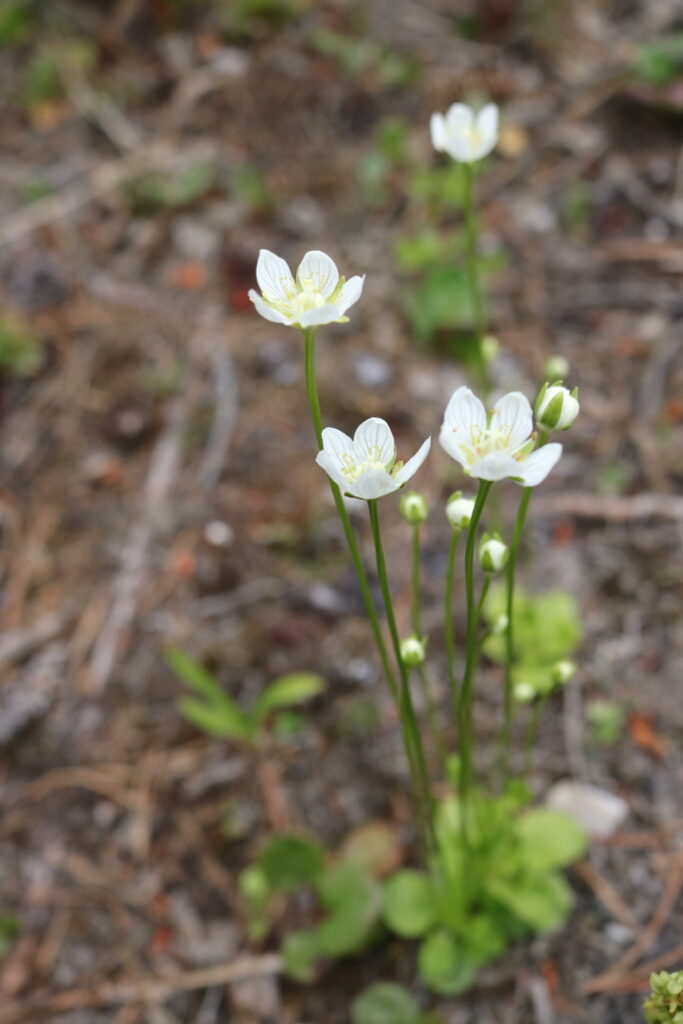
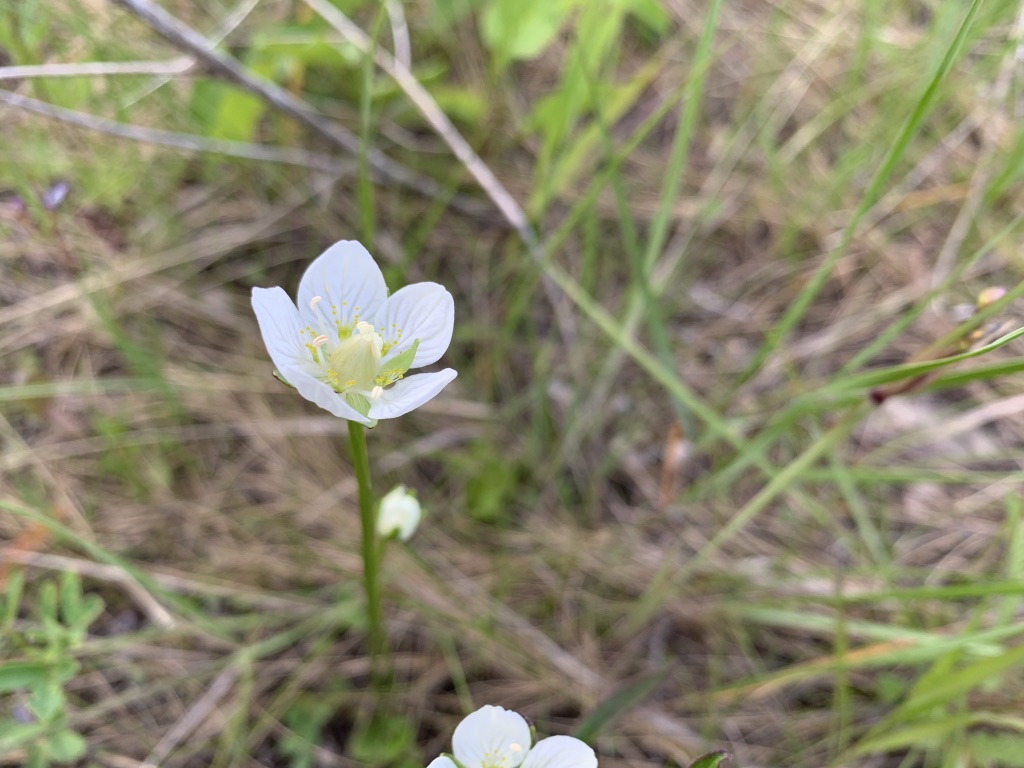
Raceme, panicle cyme, spike, umbel, corymb, twinned, singular, etc.? Singular flower per stem.
Flower Colour
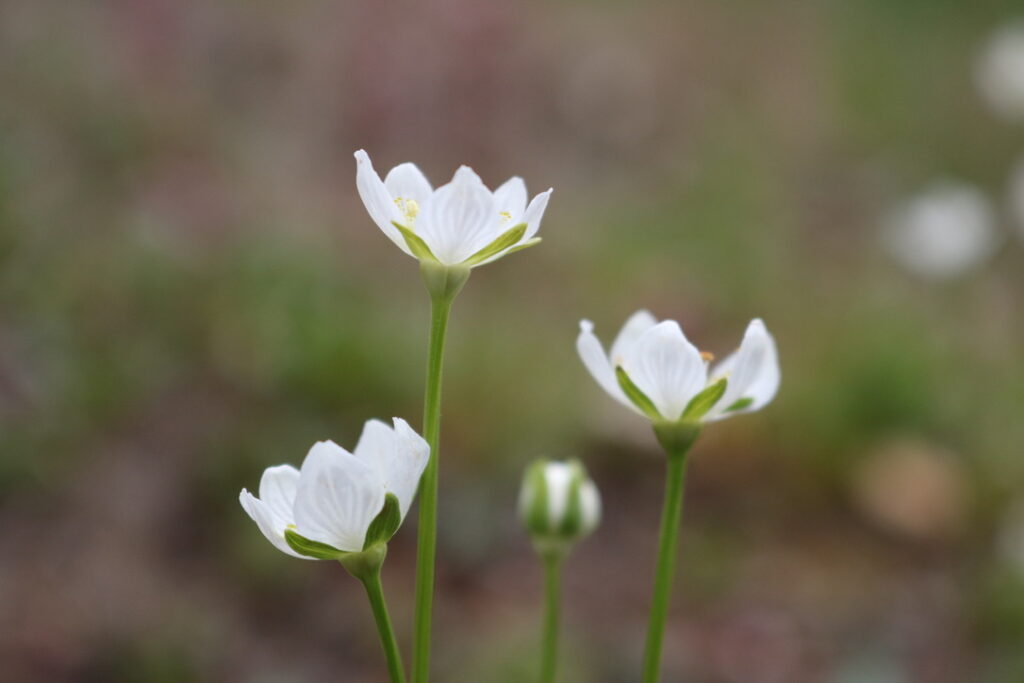
- What colour are the petals? White.
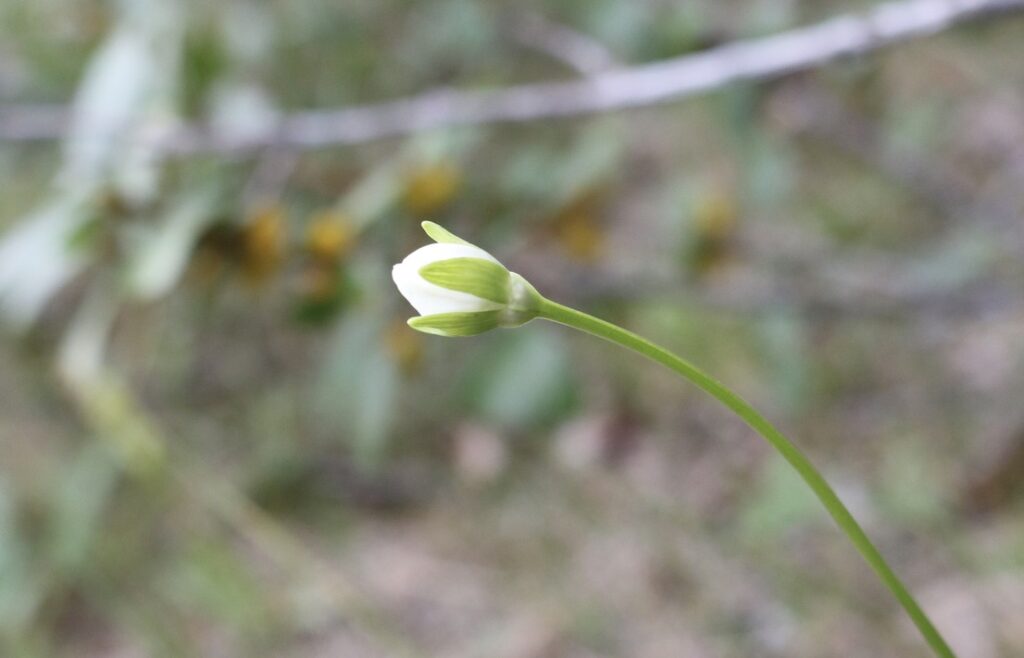
- What colour are the sepals? Green.
- What colour are the stamens? Yellow anthers, filament mostly white to light green.
Flower Size
- 1.8 cm (~3/4″) – [Cdn] dime-sized
Flower Composition
Regular, composite, irregular, or pea-like? Regular
Number of petals? Five
- Petal shape, in general? Obovate
Shape of corolla: trumpet-like, flat, cupped, bell-shaped, etc.? Cupped to flattened as flowers get older.
Is ovary superior or inferior to petals & sepals? Ovary superior
Any hair-like structures on flower parts? No.
Fruits & Seeds
What type of fruiting body does this specie produce? Capsules.
- What is its size? 10 to 12 mm long.
- What is its shape? Ovoid.
- Are there any other features to note? No.
Where to Find This Species
What ecoregions and habitats does this plant most commonly occur in? Mostly in the Montane Ecoregion, however it is also occasionally found in the Aspen Parkland Ecoregion and Mixed Boreal Ecoregion. It prefers moist to wet shaded places such as along streams, in boggy places such as fens or marshes, in boggy woods, and near seepages and springs.
What plant community is this plant found in, or occupies as the dominant species? It is not a dominant species, but found in shaded areas where woody plants like Salix spp. (willows) or Pinus glauca (white spruce) or other trees also benefit from the ephemeral to seasonal moisture.
Which states/provinces can this species found? All Canadian provinces except Atlantic provinces, as well as in the Midwest and western half of the United States.
When to Find Blooms/Inflorescences
What time of year is this plant most likely to bloom? What seasons to expect, and what months of the year? Summer; in Alberta, most likely to find blooms in July.
Is this Species Poisonous or Edible?
Is this species is edible or does it have any poisonous or toxic properties that you need to be aware of? Unknown edibility or toxicity; use caution and always assume plant is toxic. Forage value for wildlife and livestock is poor.
Synonyms & Other Names
Other scientific names this plant is or has historically been known by:
- Parnassia californica (A. Gray) Greene
- Parnassia montanensis Fernald & Rydberg
- Parnassia multiseta (Ledebour) Fernald
- Parnassia palustris subsp. neogaea (Fernald) Hultén
- Parnassia palustris var. californica A. Gray
- Parnassia palustris var. montanensis (Fernald & Rydberg) C.L. Hitchcock
- Parnassia palustris var. multiseta Ledebour
- Parnassia palustris var. neogaea Fernald
- Parnassia palustris var. tenuis Wahlenberg
Other common names this plant has been known by (English only):
- Meadow Grass-of-Parnassus
- Northern Grass-of-Parnassus
- Bog-star
What Other Species Can this be Confused With?
What other species you may confuse this with? Other Grass-of-Parnassus species include:
- Parnassia fimbriata (Fringed Grass-of-Parnassus)
- Parnassia parviflora (Smallflowered Grass-of-Parnassus)
- Parnassia kotzebeui (Kotzebeu’s Grass-of-Parnassus)
What are any details to help distinguish this species from others?
- P. fimbriata has narrower petals with hair-like fringes on lower half of each petal.
- P. parviflora has smaller flowers with petals elipitical-oblong; overall a smaller plant. Mostly montane-occuring.
- P. kotzebeui is shorter in stature, and prefers more rocky or alpine areas.
Interesting Notes
Is there any value of this plant for grazing herbivores, both domesticated and wild? None to very little.
What pollinators love to visit (if forb or flowering shrub)? Hoverflies and bees are attracted to this flower and its deceptive sterile stamens which look like droplets of nectar.
Is it commonly used for reclamation purposes? No.
Any stories about name origins or name meanings to share? From Common Plants of the Western Rangelands, Vol. 3: “The generic name originates from some connection to Mt. Parnassus in Greece, palustris means of marshes; the value of grass-of-parnassus lies primarily in its aesthetic appeal.”
Links for More Information
- iNaturalist – https://www.inaturalist.org/taxa/78352-Parnassia-palustris
- Saskatchewan Wildflowers – https://www.saskwildflower.ca/nat_Parnassia-palustris.html
- Texas A&M Lady Bird Johnson – https://www.wildflower.org/plants/result.php?id_plant=PAPAT
- Minnesota Wildflowers – https://www.minnesotawildflowers.info/flower/marsh-grass-of-parnassus
- Montana Field Guide – https://fieldguide.mt.gov/wa/?species=parnassia%20palustris
- USDA Plants Profile (or similar) – https://www.fs.usda.gov/wildflowers/plant-of-the-week/parnassia_palustris.shtml
- E-flora BC – https://linnet.geog.ubc.ca/Atlas/Atlas.aspx?sciname=Parnassia%20palustris&NoTransfer=1