Canada Wild Rye – Elymus canadensis L.
Family Graminaceae | Tribe Triticeae
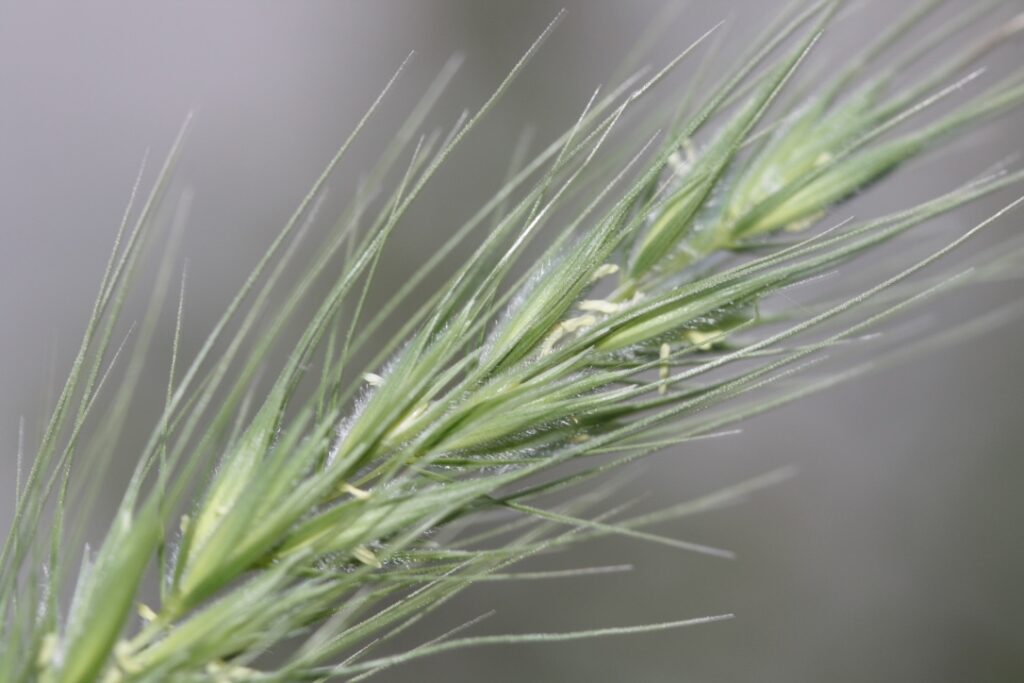
Photo Gallery
Whole Plant: At Maturity
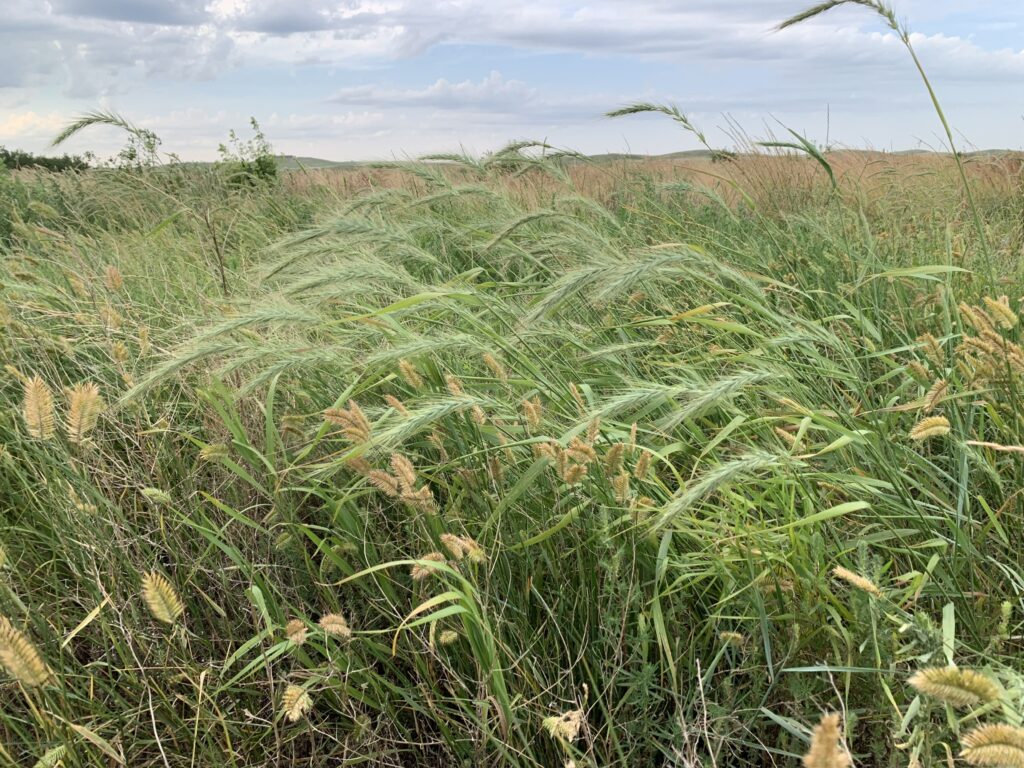
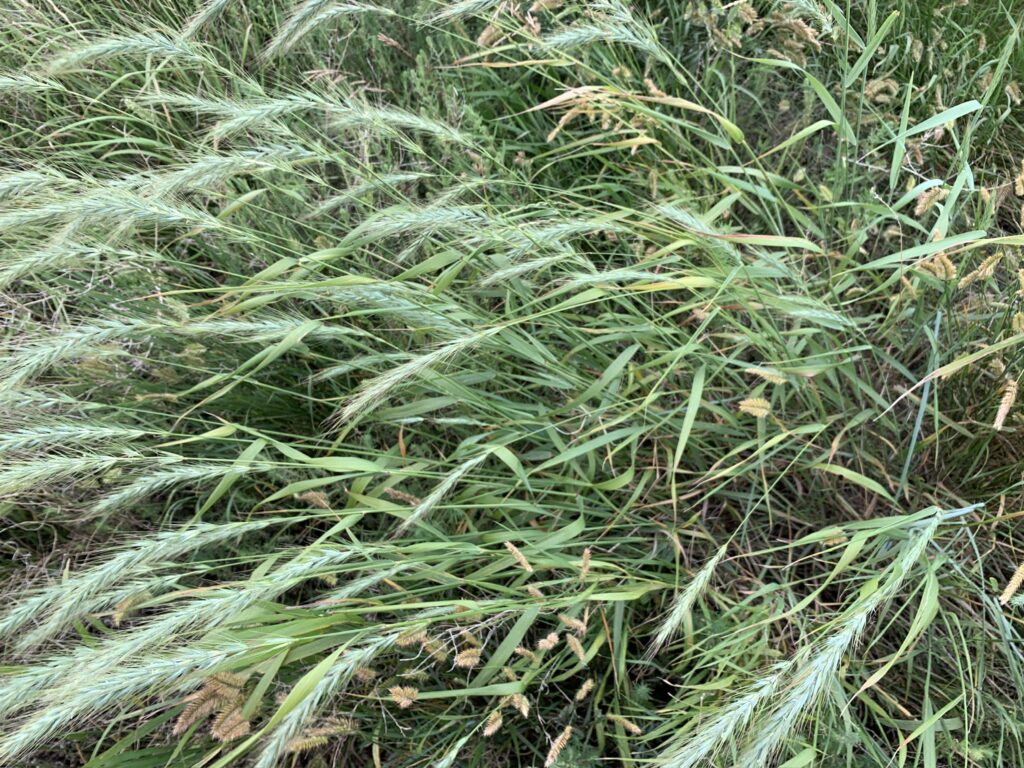
Whole Plant: Vegetative Stage
Photos coming soon!
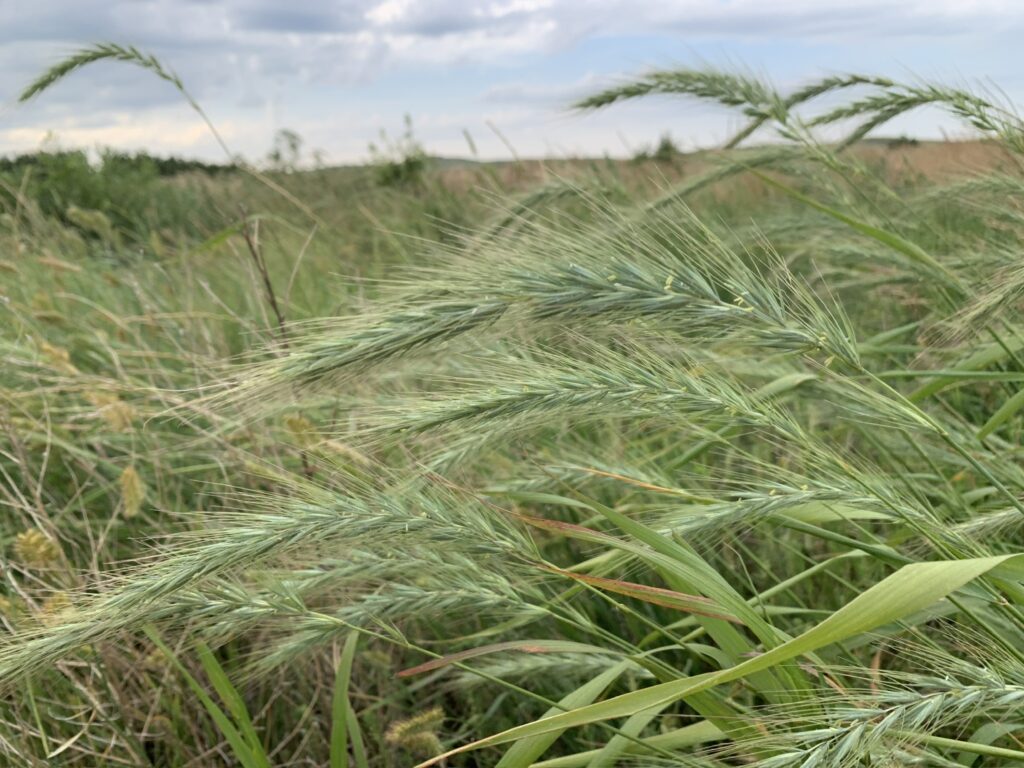
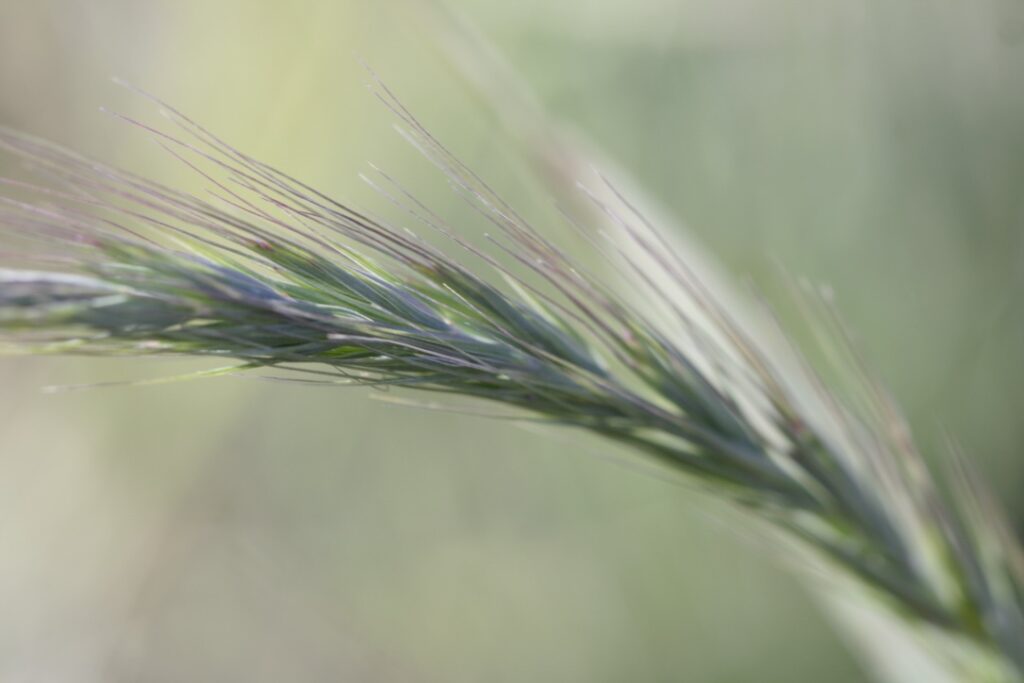
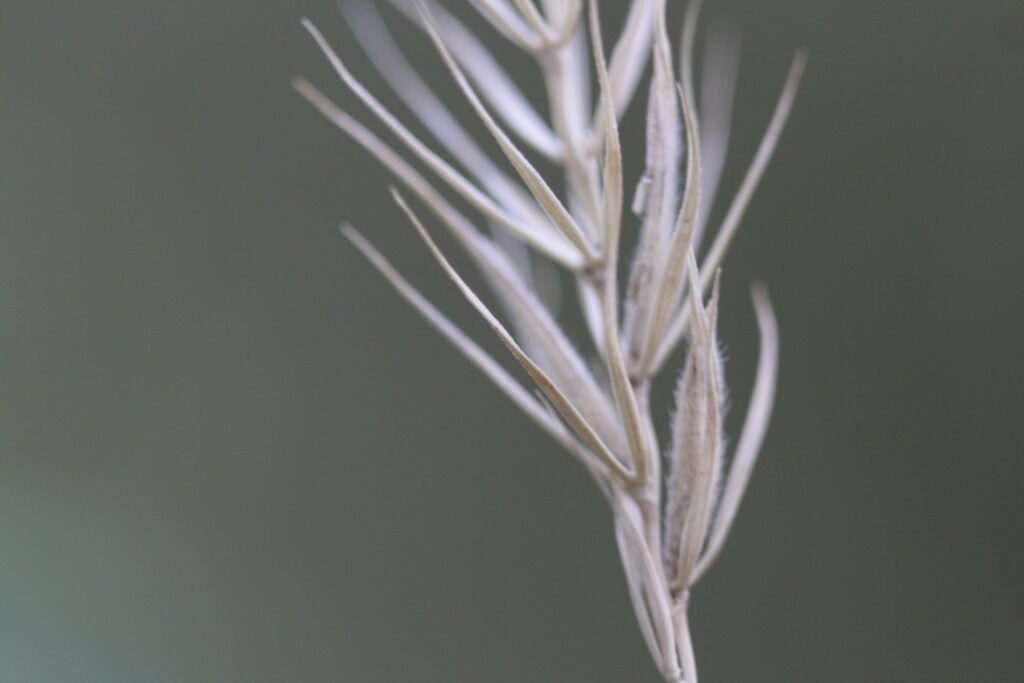
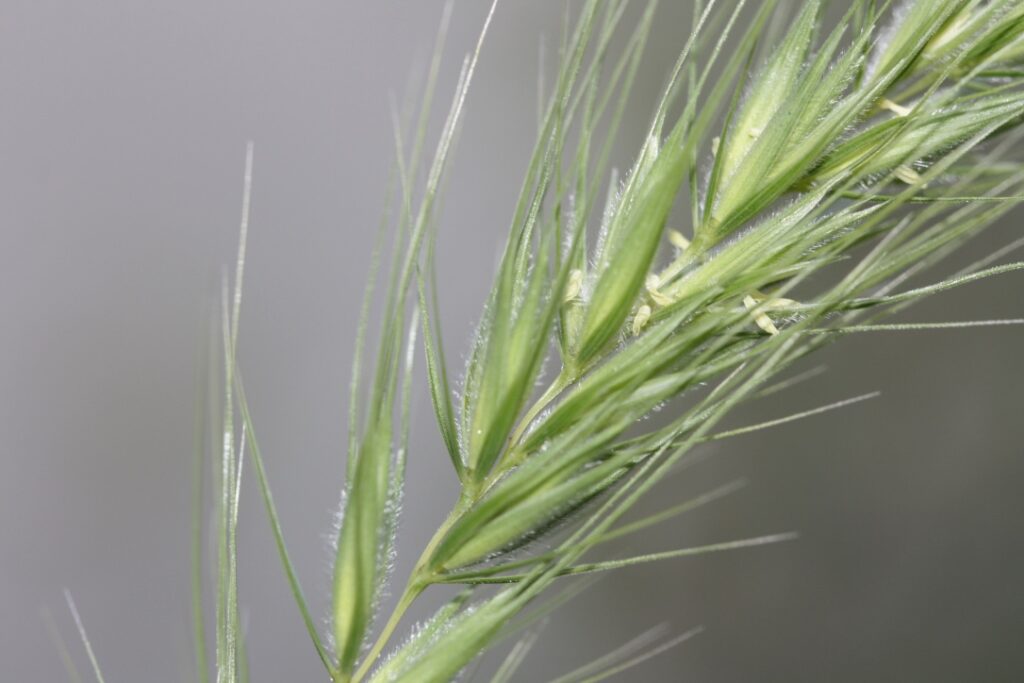
Flowers/Inflorescences
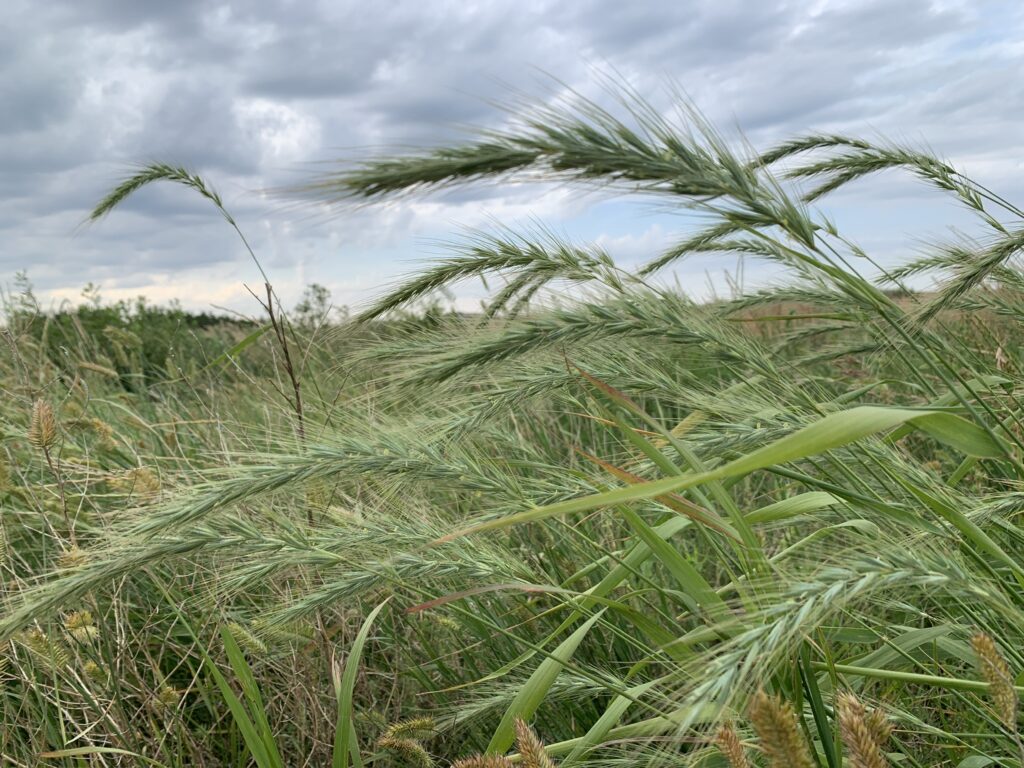
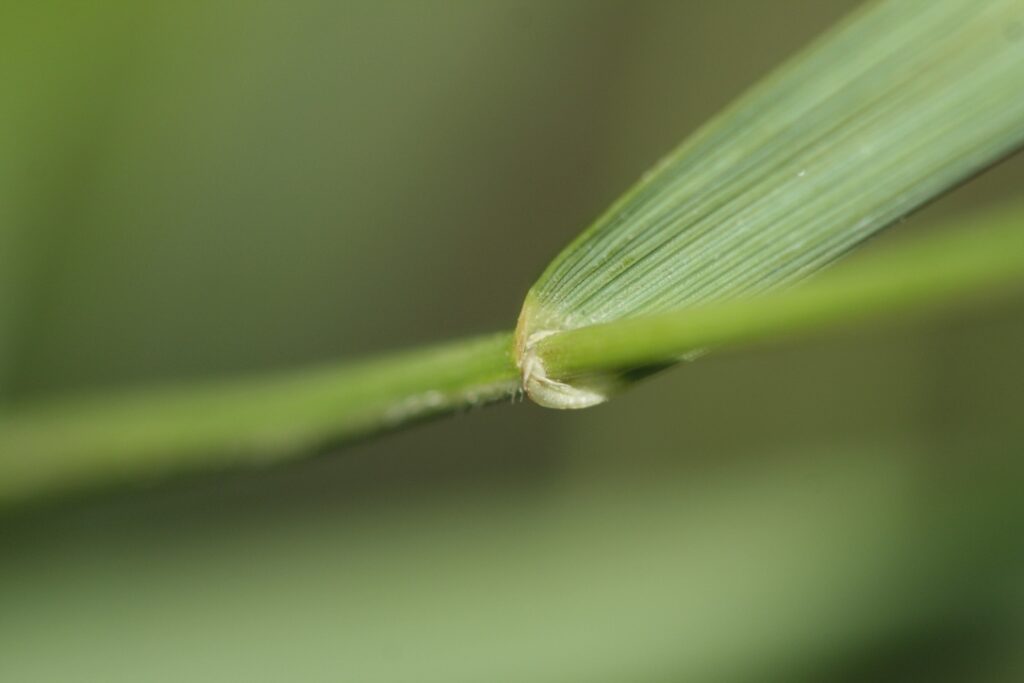
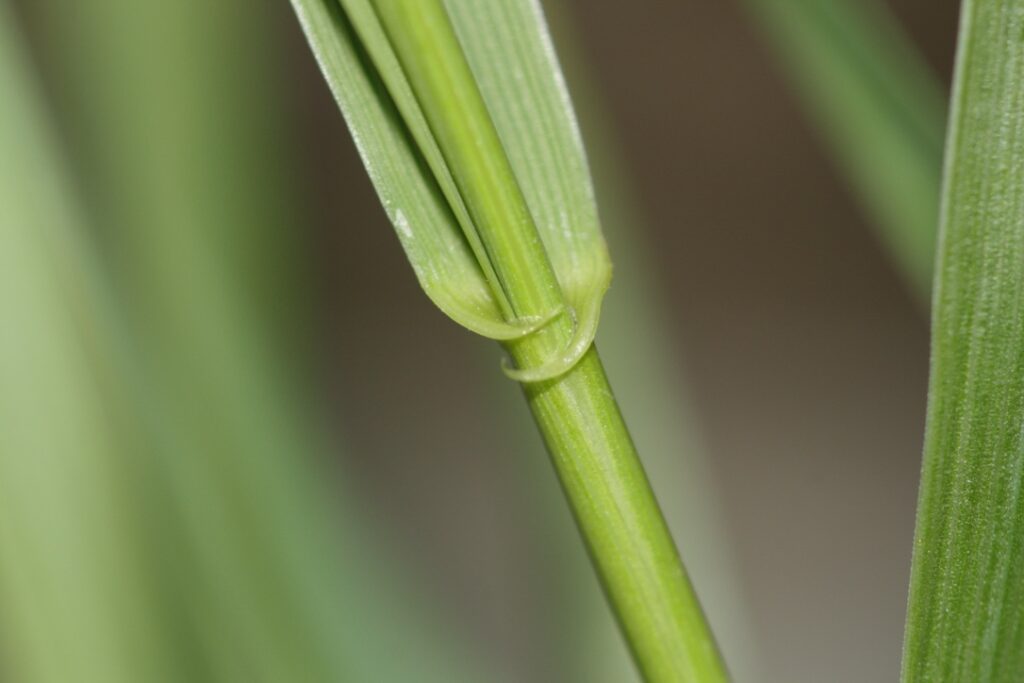
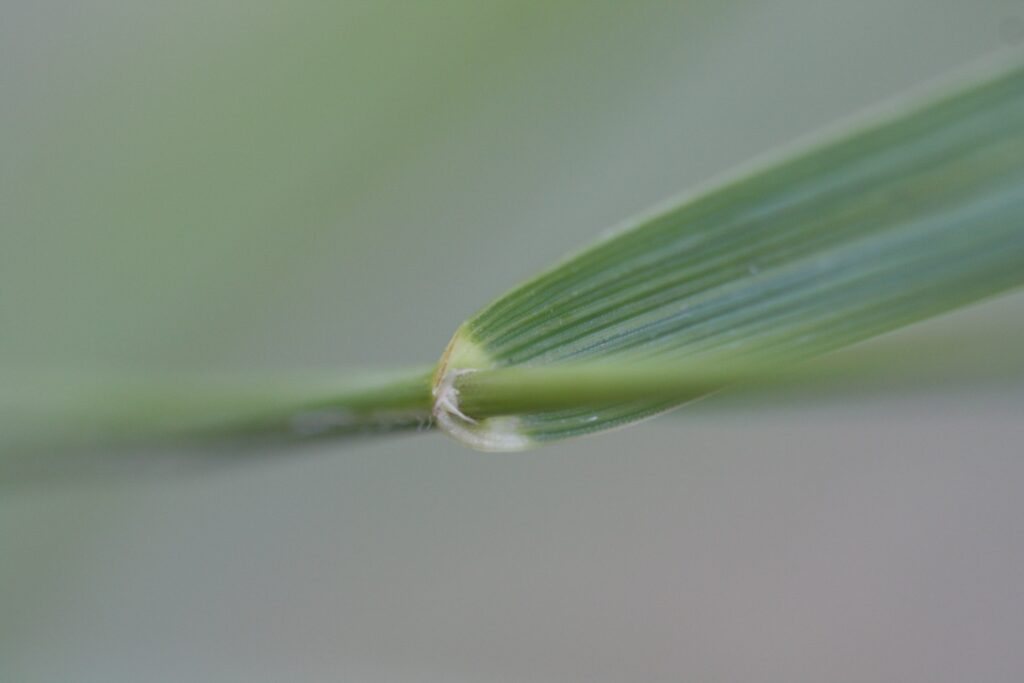
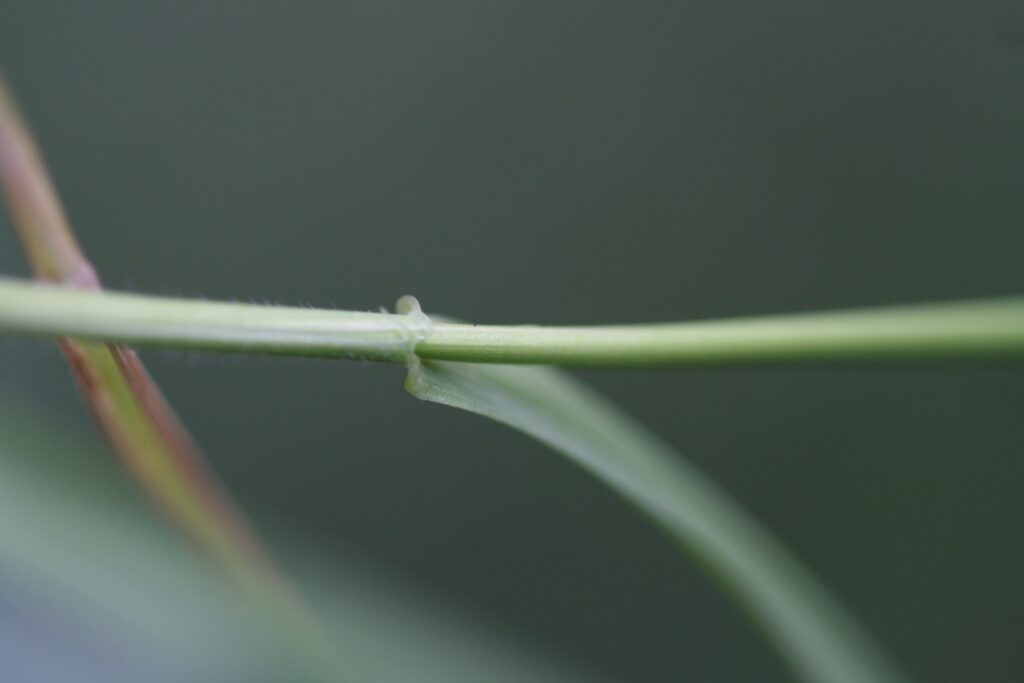
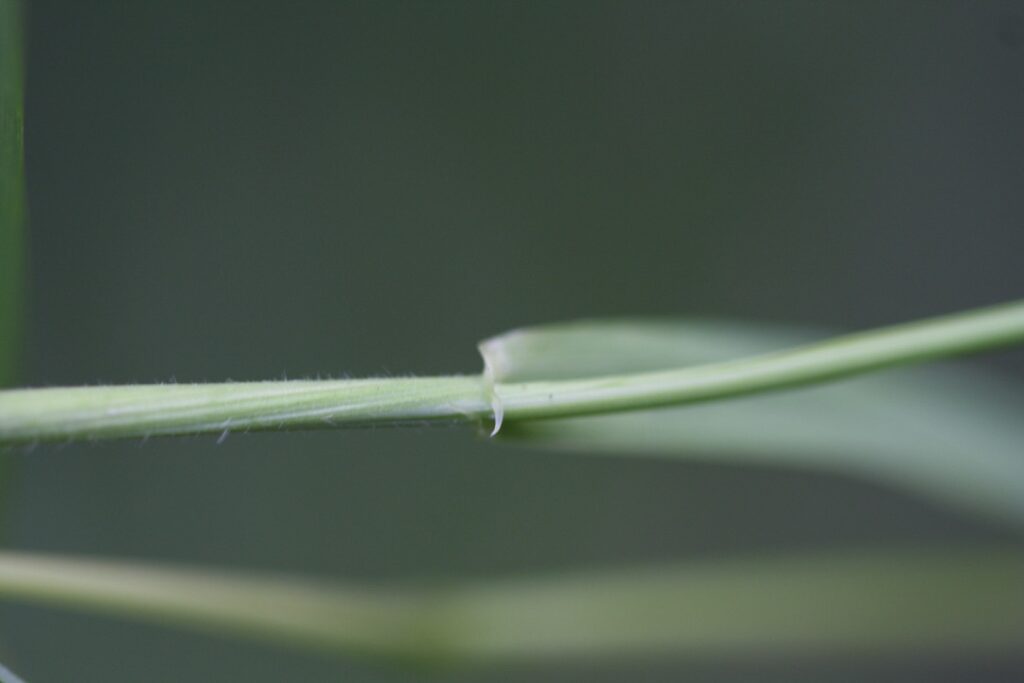
Leaves & Collars
Origin & Status
- Native or non-native to Western Canada? Native.
- If non-native, where is it considered a native species? N/A
- Is this plant generally considered a nuisance weed or not? No.
- Common or rare? Common.
Dichotomy-like Description
Growth Habit
- Erect or prostrate? Erect.
- What is its life cycle? Perennial.
Overall Height
- 3 to 5 feet (0.9 to 1.5 meters)
Stem Characteristics
- Bunched or creeping-rooted? Bunched.
- Pithy or hollow? Hollow.
- Square, round, or triangular? Round.
Rooting Type
- Rhizomes present? Rarely are rhizomes present.
- If rhizomes present, are they short or long? Short.
- Shallow or deep-rooted? Deep rooted.
Leaf & Collar Characteristics
Leaf width: To 33 cm (13 inches) long.
- Wide or narrow? Wide.
- Rolled, flattened, indented? Somewhat rolled, especially the margins; mostly flattened.
- Lax or stiff? Stuff
- What width? 3 to 15 (20) mm wide.
Leaf tip:
- Boat-shaped or sharply pointed? Sharply pointed.
Other leaf characteristics:
- Hairy or glabrous? Mostly glabrous, rarely sparsely hispid to villous, scabridulous (rough to the touch).
- Margins smooth or roughened? Smooth.
- Any particular colouration to note? Dull green, drying to greyish especially on lower leaf; green on top.
- Rolled or folded at emergence? Rolled.
Sheath shape/structure?
- What type of venation? Nothing to note.
- What colour characteristics? Mostly blue and glaucous, though some varieties are reddish-brown.
- With hairs or hairless? Scabridulous, glabrous or hirsute
Ligule present? Yes.
- If yes, what is its shape & structure? Stiff, short membrane
- If yes, how long is it? 1 to 2 mm
Collar shape/structure? Continuous, somewhat divided.
- What structure[s] describes its size? Broad
- What colouration? Yellow to brownish-purple
- Hairs or hairless? Mostly hairless, scabridulous
Auricles present? Yes.
- If yes, are they distinct or rudimentary? Distinct.
- If distinct, are there clasping claws or similar? Clasping claws.
- If rudimentary, are there clasping claws or rounded extensions? N/A
- If yes, are claws equal or not? Mostly equal.
- If yes, what is their size? 1.5 to 4 mm.
Other characteristics to note? Swollen nodes mostly concealed by leaf sheaths.
Inflorescence Type
Raceme, panicle, or spike? Spike.
- Length of inflorescence? 6 to 30 cm (2.3 to 12 inches)
If spike:
- Number of spikelets or flowers per node or joint: Two to three, occaisonally five, rarely one.
- Imbricate (folded, overlapping, shingled) or not? Overlapping
- Long or short rachilla? Short; 2 to 5 (7) mm long
- Attached edgewise, flatwise, or otherwise to the stem (esp. for those in Tribe Triticeae)? Flatwise.
Inflorescence Colour
Is there any notable colouration to note on the inflorescence, spikelets and/or florets? Mostly glaucous.
Spikelet & Floret Sizes
- Length of spikelets: 12 to 20 mm
- Length of glumes: 6 to 13 mm
- Length of lemmas/paleas: 8 to 15 mm
- Length of palea: 8.5 to 13 mm
- Length of awns (if present): 8 to 27 mm long.
Inflorescence Composition
How many florets are there per spikelet, including sterile? Three to seven.
- Glumes unequal or equal? Usually equal, occasionally subequal.
- Glumes shorter, equal to, or longer than either lemmas, palea, or florets? Longer than
- Lance-shaped, awl-shaped, egg-shaped, or other notable shape? Linear-lanceolate to subsetaceous
- Pointed, awned, or dull? Awned
- Straight or twisted awn? Straight awn
- Where is the awn attached from? Glume apex
Hairs on any parts of the flower? Yes.
- If so, which structures? Glumes and lemmas.
Where to Find This Species
What ecoregions and habitats does this plant most commonly occur in? E. canadensis is commonly found in the Prairie and Aspen Parkland Ecoregions. It prefers sandy soils in grasslands and dunes, such as those on shores or stream banks. This plant can also be found in disturbed areas, open woodlands, fence lines, and ditches, almost always in open areas or areas with shade for part of the day. It is adapted to a wide range of dry and moist soils, so you will likely find it near wetlands and possibly in the drier uplands.
What plant community is this plant found in, or occupies as the dominant species? E. canadensis is not typically known as a dominant climax species like other grasses, therefore it is found in a variety of plant communities in mesic or subhygric areas dominated by Bromus and other Elymus, Agropyron or Pascopyron species.
Which states/provinces can this species be found in? All over Canada and the United States EXCEPT the Yukon Territories, Nunavut Territory, Newfoundland & Labradour, Florida, and Louisiana.
When to Find Blooms/Inflorescences
What time of year is this plant most likely to bloom? What seasons to expect, and what months of the year? Typically blooms from May to July, depending on the region. This plant will bloom earlier in the southern areas than in the northern regions.
Is this Species Safe or Hazardous to Animals?
Is this species known for posing a hazard for humans and animals, particularly with awns? Yes, it has the potential to pose a hazard to pets and livestock, especially when it has gone to seed and the awns are hard and brittle. Even though it isn’t as widely known to be a hazard like Foxtail Barley (Hordeum jubatum) or Needle & Thread Grass (Hesperostipa comata), those long awns are unmistakable and should be avoided, if you are hiking with a dog, as much as possible. The awns are usually less of a hazard while the plant is blooming, but it is still important to exercise caution regardless.
Synonyms & Other Names
Other scientific names this plant is or has historically been known by:
- Clinelymus canadensis
- Elymus brachystachys
- Elymus canadensis ssp. brachystachys
- Elymus canadensis ssp. hirsutus
- Elymus canadensis ssp. glaucifolius
- Elymus canadensis ssp. robustus
- Elymus canadensis ssp. villosus
- Elymus canadensis ssp. wiegandii
- Elymus crescendus
- Elymus glaucifolius
- Elymus philadelphicus
- Elymus philadelphicus ssp. hirsutus
- Elymus robustus
- Elymus wiegandii
- Hordeum canadense
- Hordeum patulum
- Roegneria canadensis
- Sitanion brodei
- Terrellia canadensis
Other common names this plant has been known by (English only):
- Canadian Wildrye
- Prairie Wildrye
- Nodding Wildrye
- Great Plains Wildrye
What Other Species Can this be Confused With?
What other species may you confuse this with?
Other wild rye species such as:
- Hairy Wild Rye (Leymus innovatus)
- Russian Wild Rye (Elymus junceus)
- Smooth Wild Rye (Elymus glaucus)
What are any details to help distinguish this species from others? The key to preventing confusion between these species is the presence of long awns typical of E. canadensis. Most wild rye species have awns are half the length, have short awns, or none at all. It is much more difficult to tell species apart in their vegetative form, however E. canadensis tends to be somewhat more blue-grey than most wild rye species, which are usually more green.
Interesting Notes
Is there any value of this plant for grazing herbivores, both domesticated and wild? Yes. The forage value of this species is good to fair for most livestock and wildlife; it is better in quality while it is green and growing during spring or early summer, with forage quality quickly declining as it matures. While it is deemed an “increaser” in rangelands, it can decline under heavy utilization and borderline overgrazing.
Additionally, birds and small mammals will readily eat the seeds. Small birds use the long awns, glumes and lemmas as nesting material.
What pollinators love to visit, if applicable? It attracts a lovely little butterfly called the Zabulon Skipper (Poanes zabulon), which is found mainly in the southern states, and is normally not found in Canada.
Is it commonly used for reclamation purposes? Yes. It is of good use for reclamation as seeds are commercially available for use in native grass seed mixtures. It propagates fairly quickly and is suitable for soils with good moisture and areas with part-shade.
Any stories about name origins or name meanings to share? Nothing to note.
Are there other interesting notes not covered already? This species will cross-polinate with other Elymus species creating new crossbreds. It is largely self-pollinated, but cross-pollination will happen.
Links for More Information
- iNaturalist – https://www.inaturalist.org/taxa/129000-Elymus-canadensis
- Texas A&M Lady Bird Johnson – https://www.wildflower.org/plants/result.php?id_plant=elca4
- Minnesota Wildflowers – https://www.minnesotawildflowers.info/grass-sedge-rush/canada-wild-rye
- Montana Field Guide – https://fieldguide.mt.gov/ca/?Species=Elymus%20canadensis
- USDA Forest Service – https://www.fs.usda.gov/database/feis/plants/graminoid/elycan/all.html
- E-flora BC – https://linnet.geog.ubc.ca/Atlas/Atlas.aspx?sciname=Elymus%20canadensis&noTransfer=0