Winterfat – Krascheninnikovia lanata (Pursch) A.D.G. Meeuse & Smit
Family Amaranthaceae
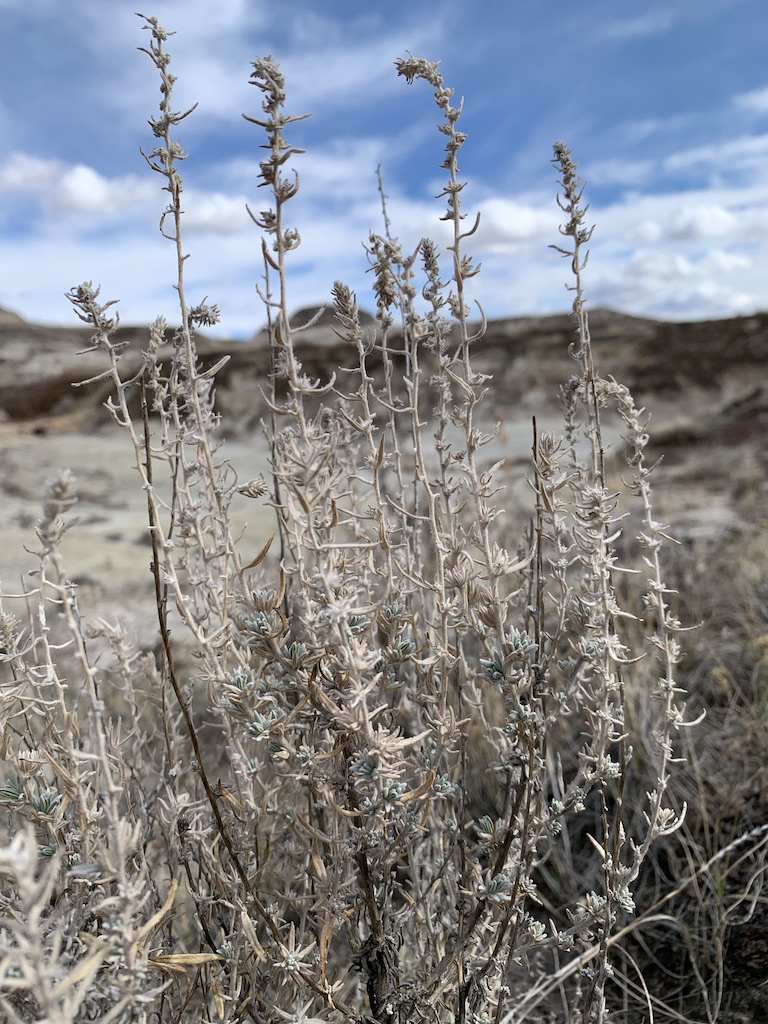
Photo Gallery
Whole Plant
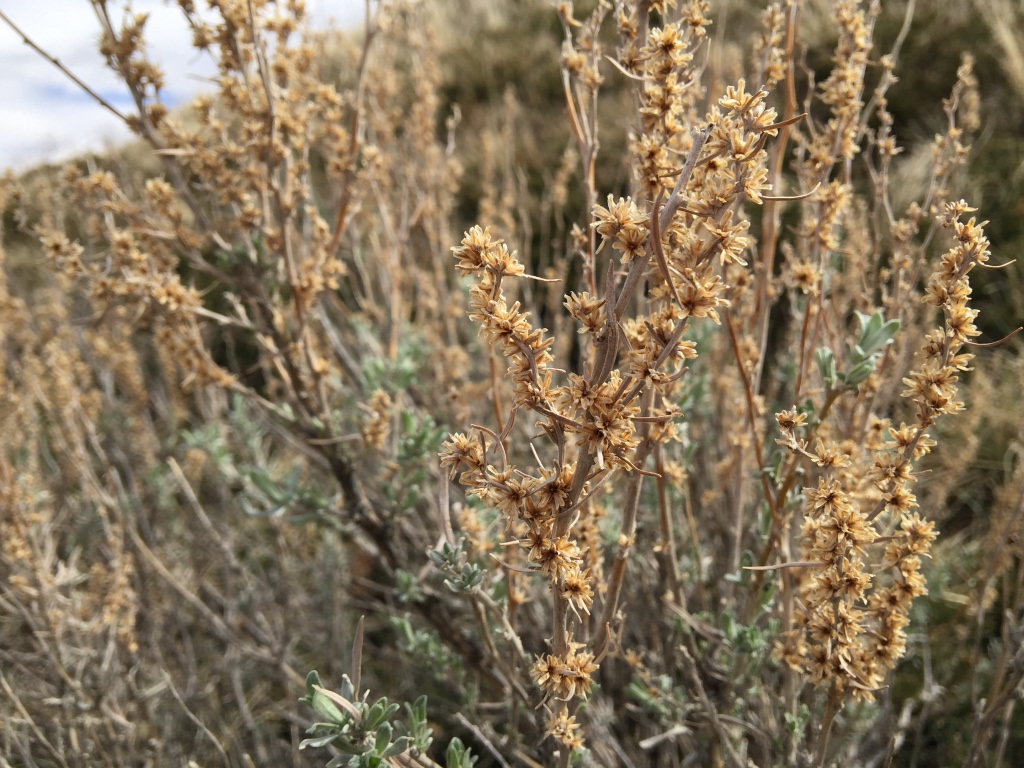
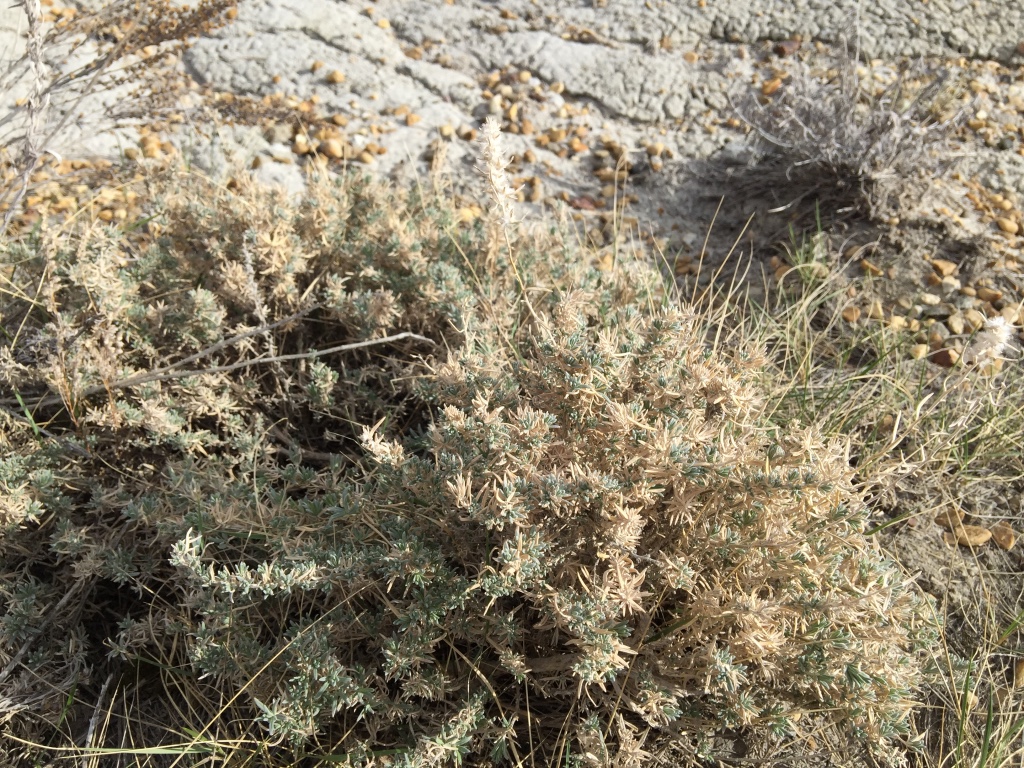
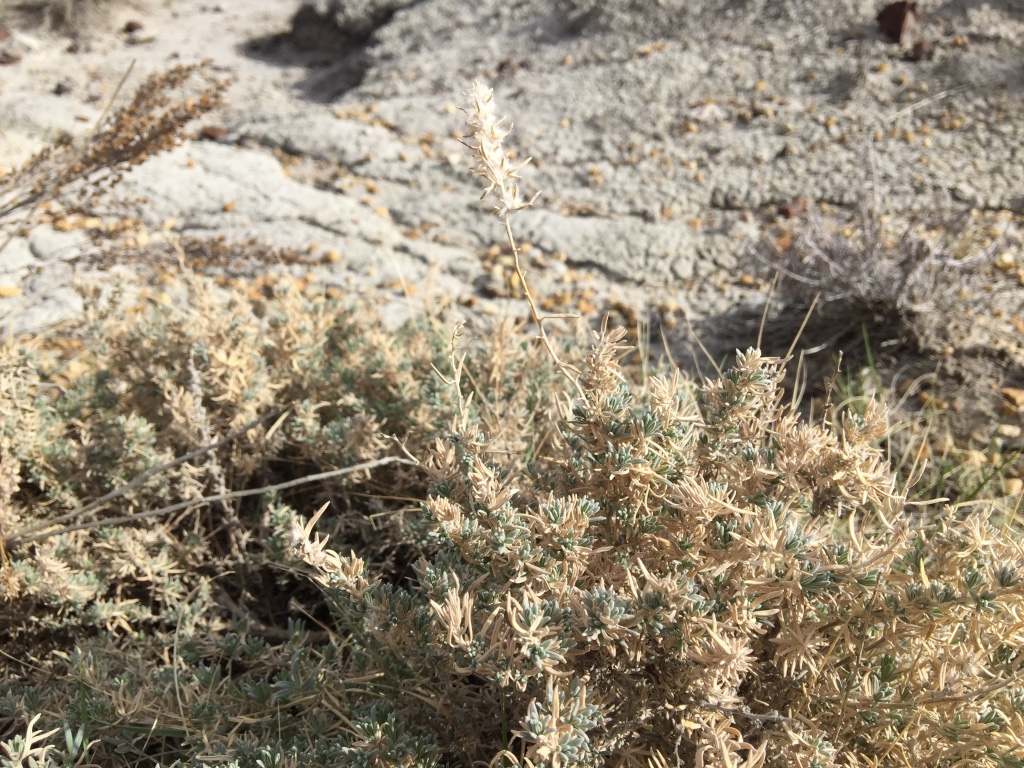
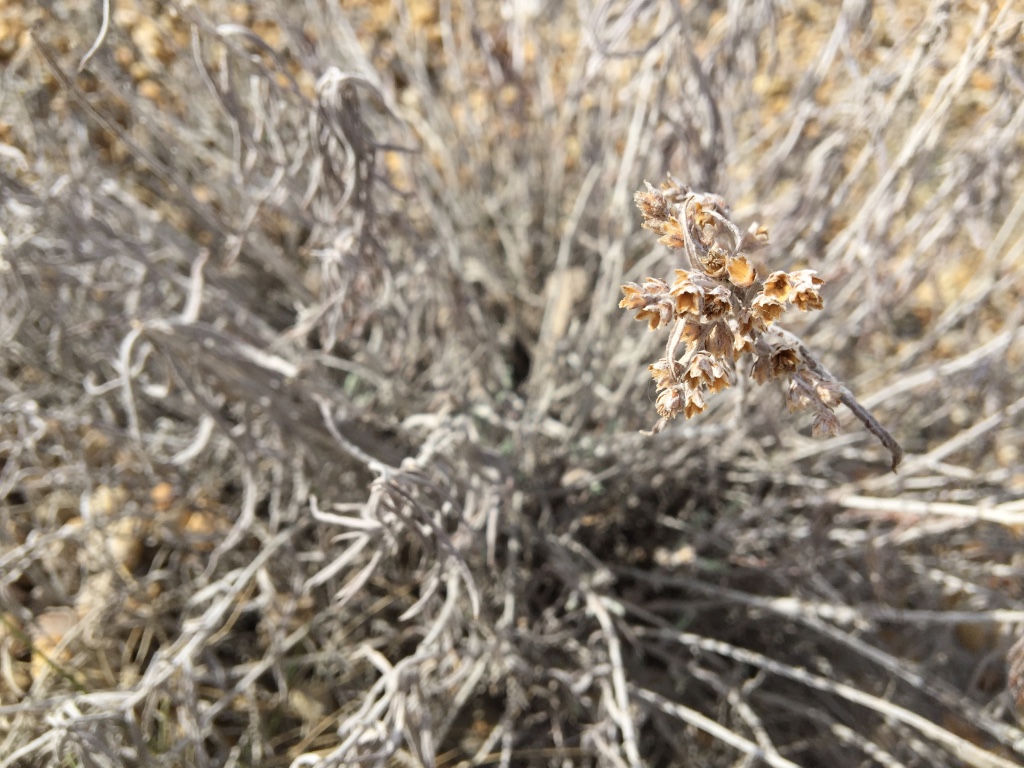
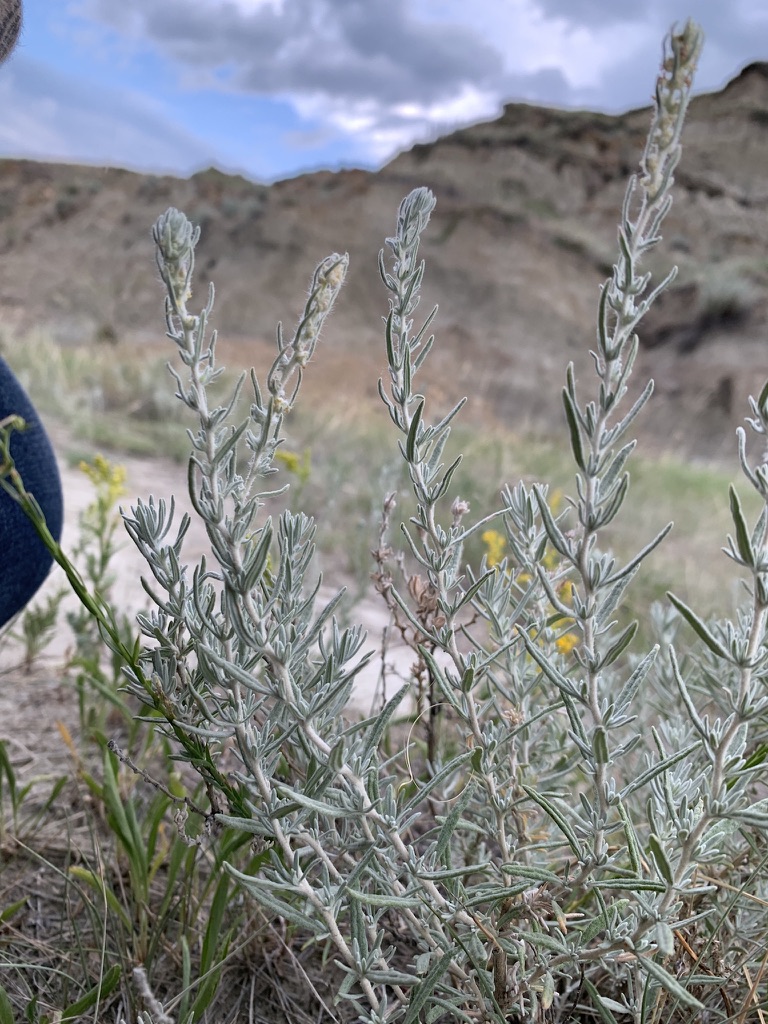
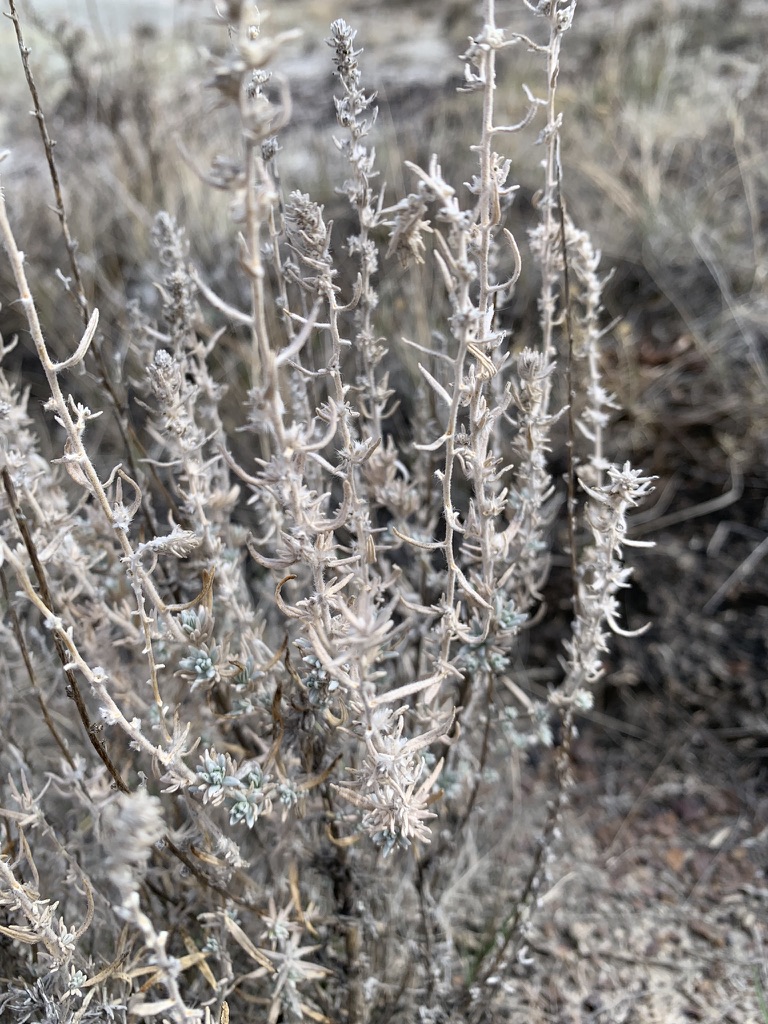
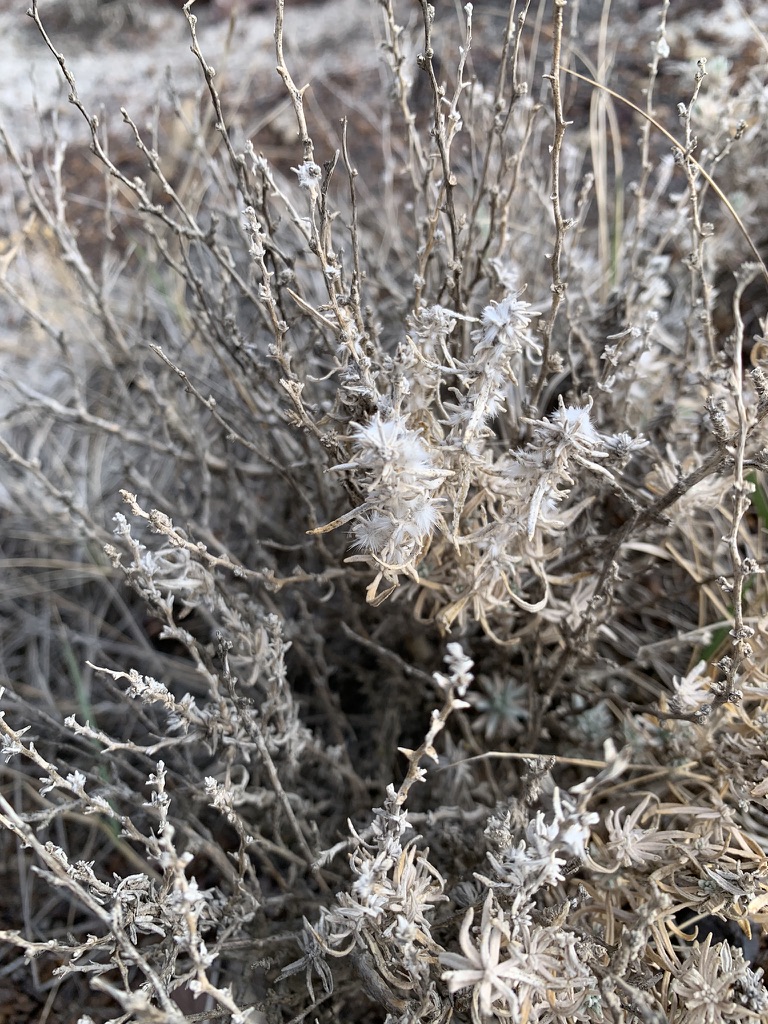
Flowers/Inflorescences/Seed-set Maturity
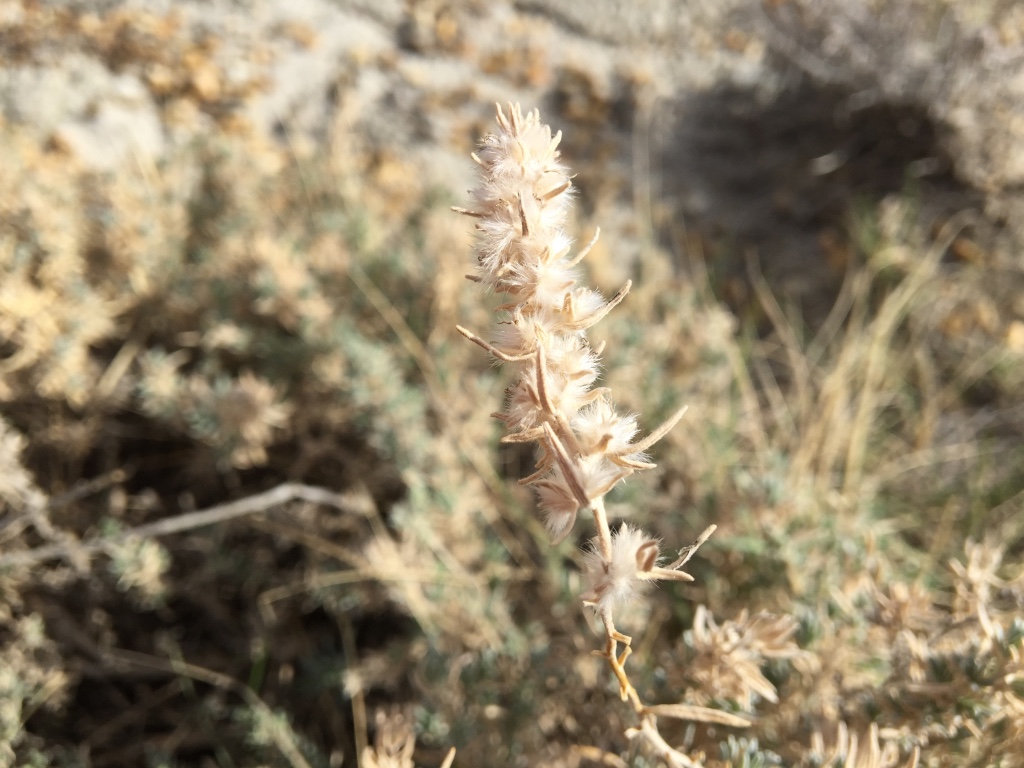
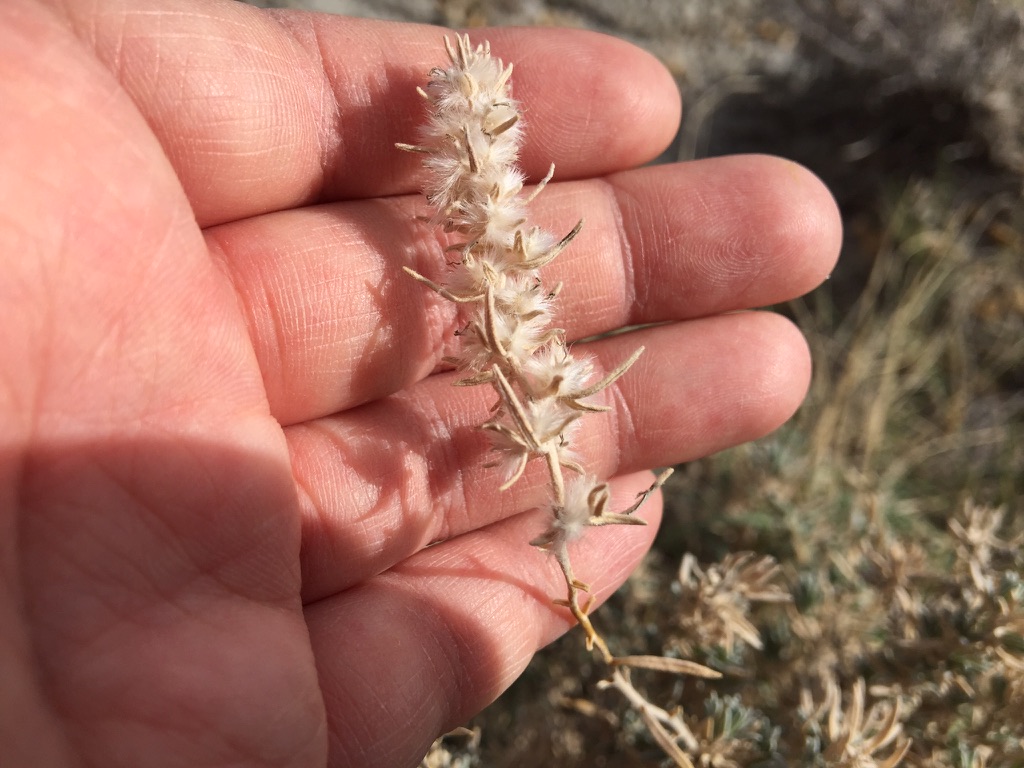
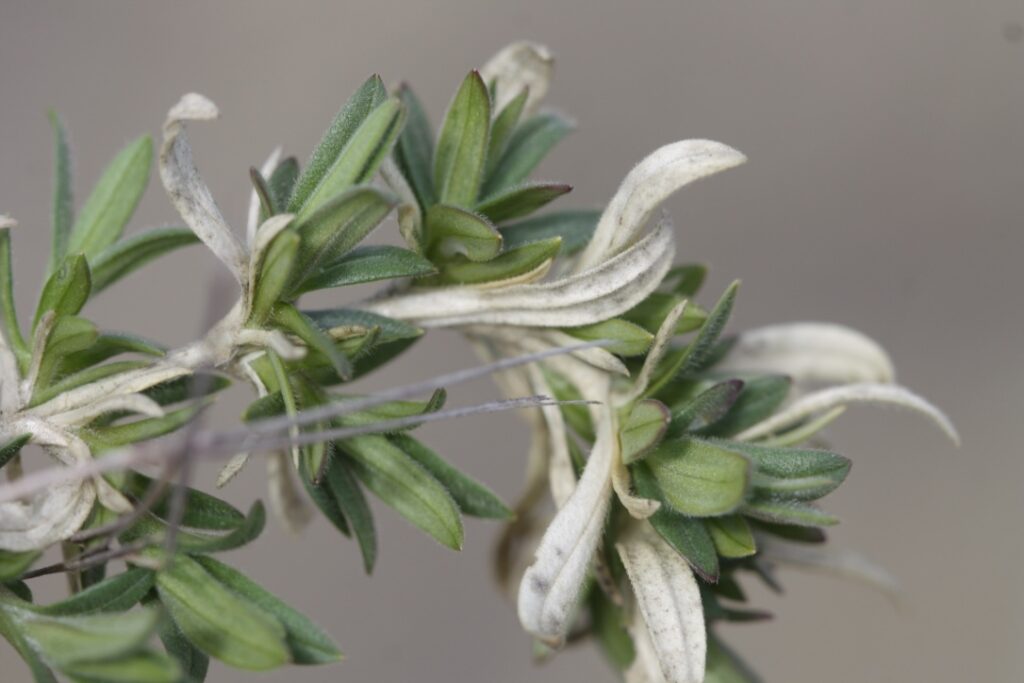
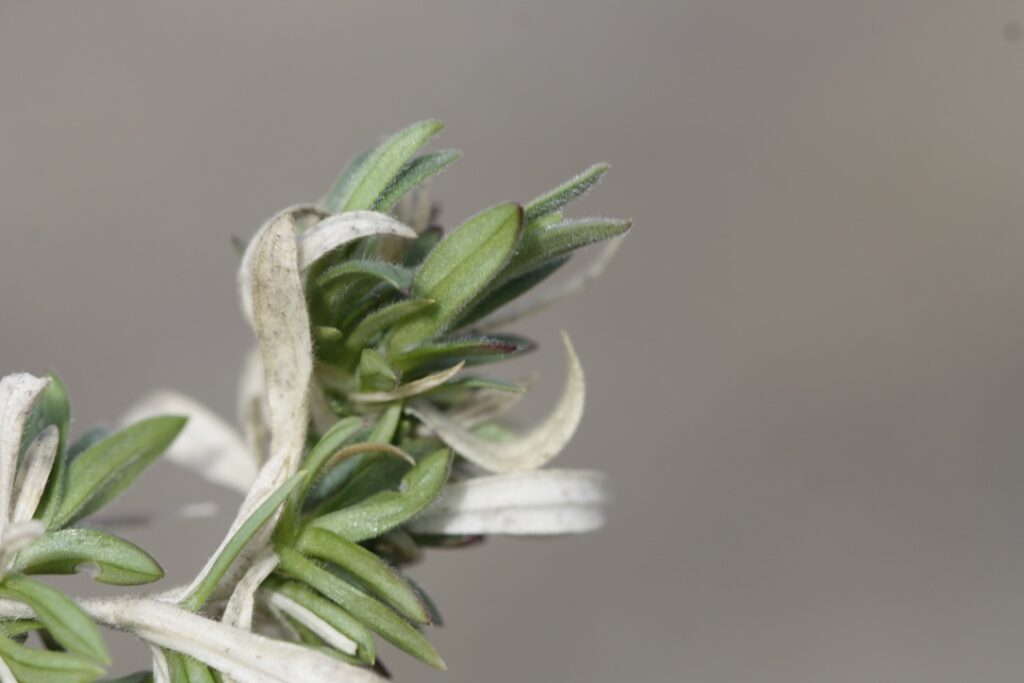
Leaves/Vegetation
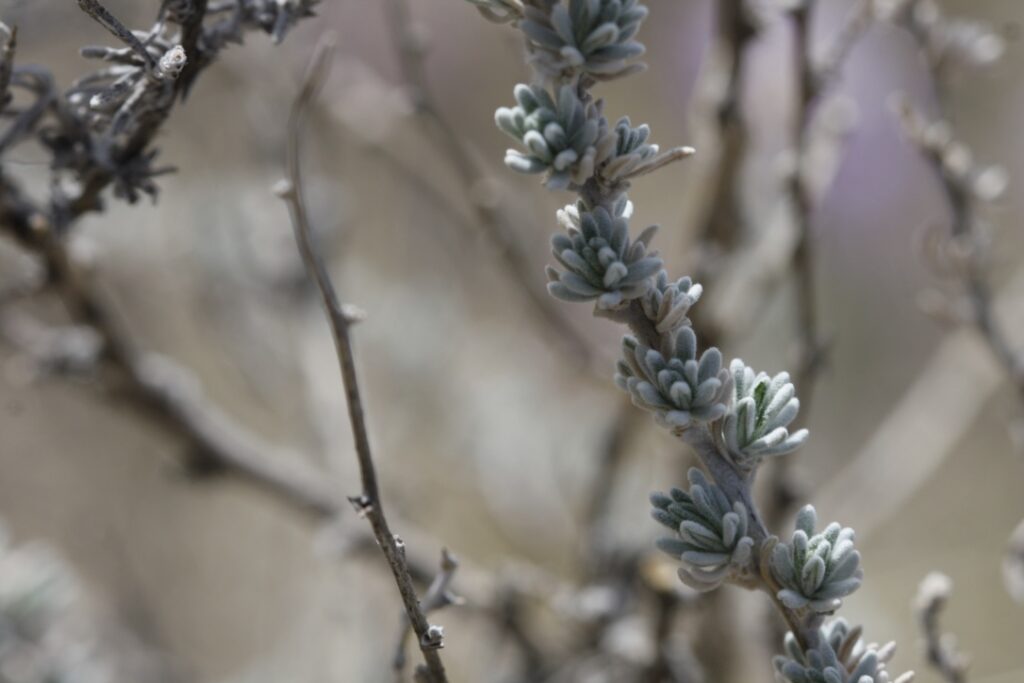
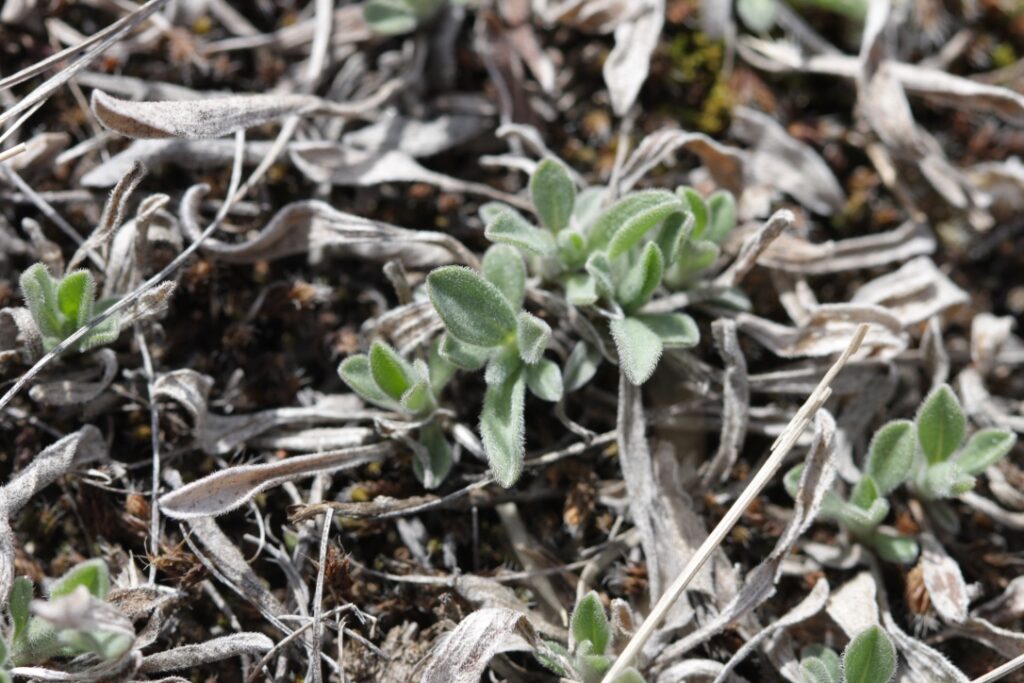
Origin & Status
- Native or non-native to Western Canada? Native
- If non-native, where is it considered a native species? N/A
- Is this plant generally considered a nuisance weed or not? No.
- Common or rare? Fairly common.
Dichotomy-like Description
Growth Habit
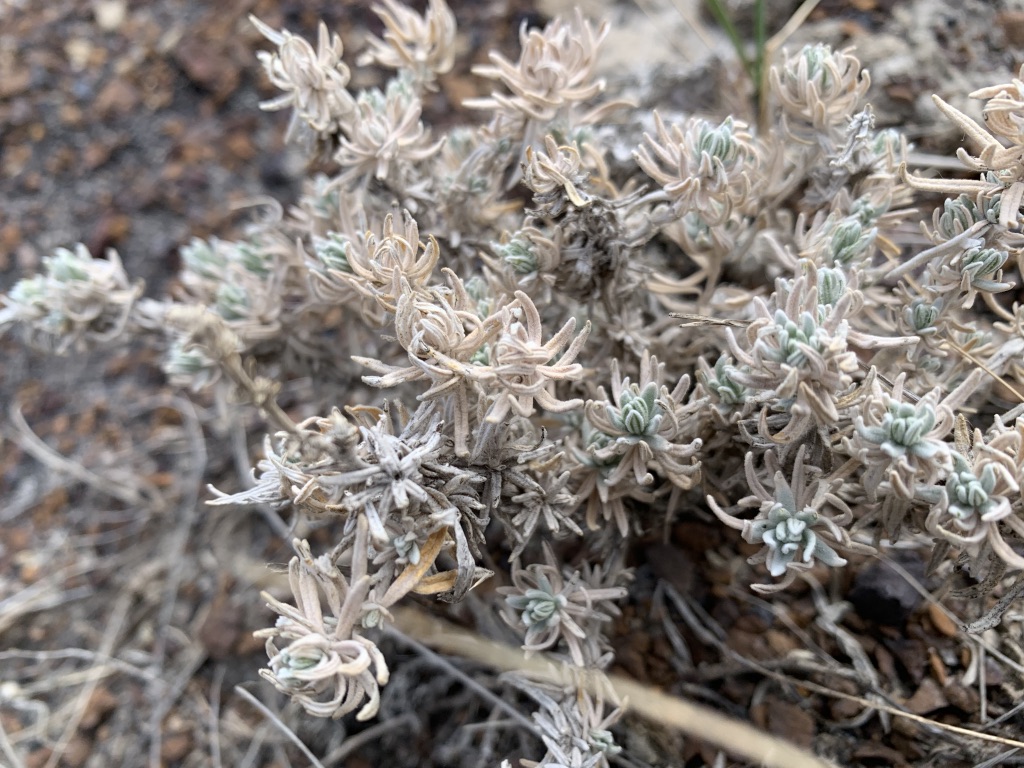
- Erect, prostrate, creeping, or climbing? Erect, low-growing, branching at base.
Overall Height
- 15 to 50 cm (6 to 20 inches)
Stem Characteristics
- What is the bark colour? Grey
- Smooth, papery, or rough bark? More or less smooth, mostly covered by leaves.
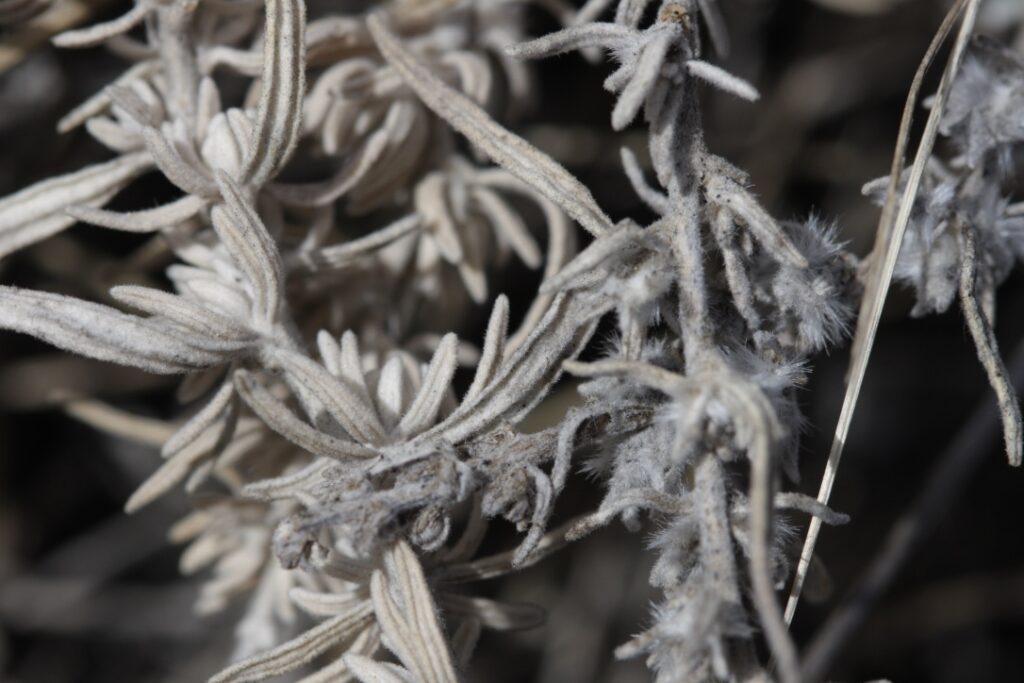
- What other notable features are there? Branching at base, produces several erect, annual stems, densely white-rusty hairy with star-shaped hairs.
Rooting Type
- Stolons or rhizomes present? No.
- If yes, are stolons/rhizomes short or long? N/A
- Taprooted only or are there also fibrous roots? Mostly taprooted.
Leaf Arrangement on the Stem
- Are leaves arranged opposite, alternate or whorled? Alternate.
- How are leaves/leaflets attached to the stem? Short petioles or sessile
- Axial leaves present? No.
- Stipules present? No.
Leaf Characteristics
Simple or Compound leaves? Simple.
- (If Compound) What type of division? N/A
- (If Compound) How many leaflets per leaf? N/A
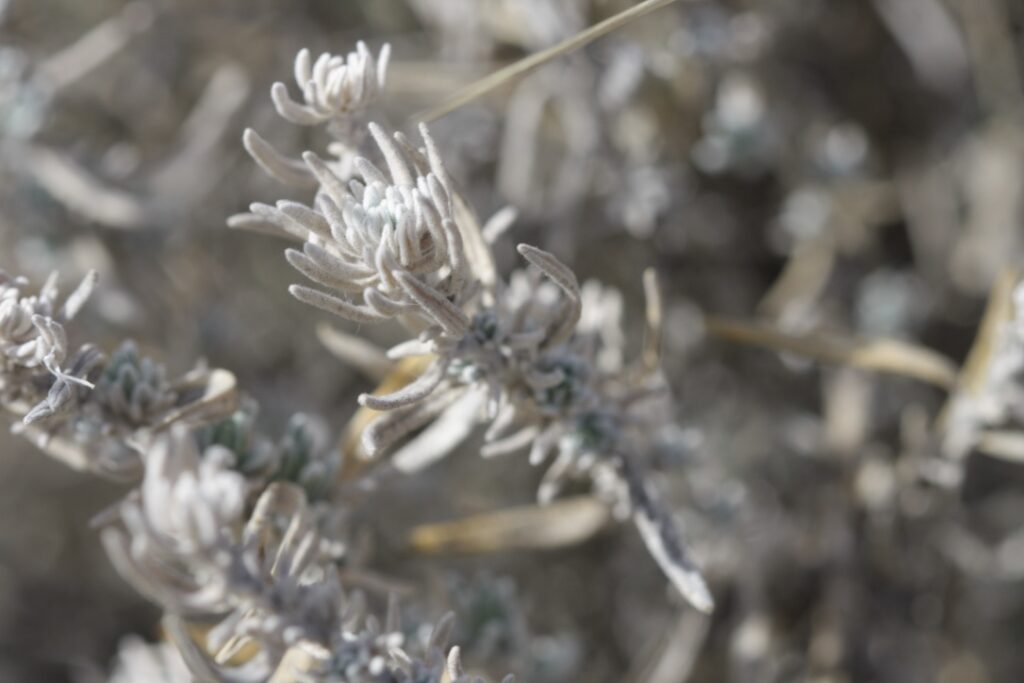
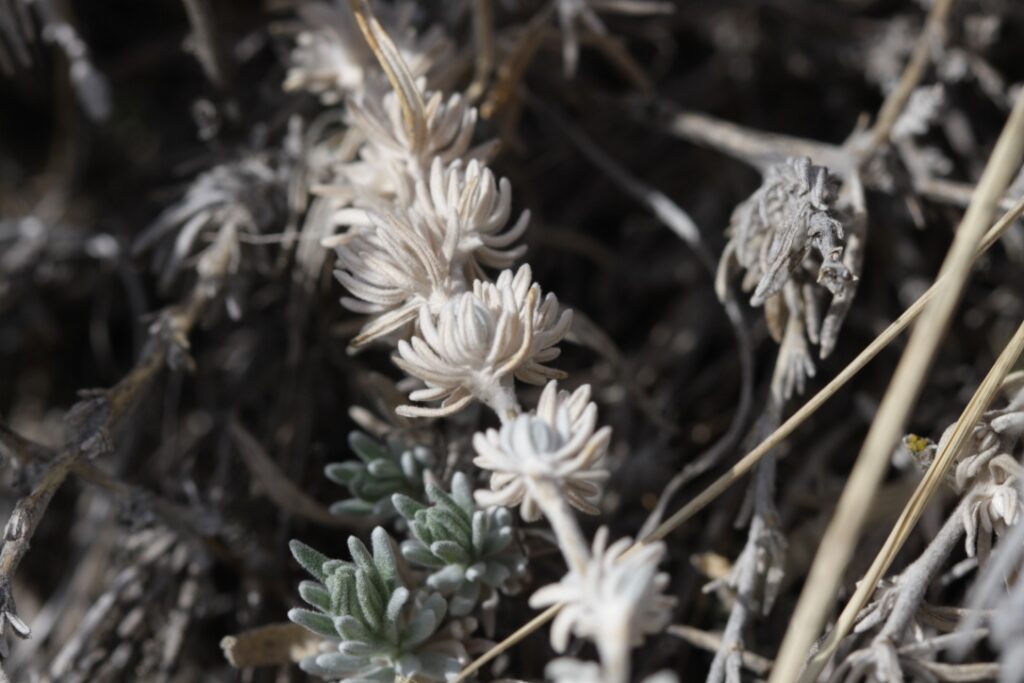
- What is its (including leaflets) shape? Linear to lineolanceolate
- Leaf edges smooth or toothed? Smooth
- (If toothed) Is it fine or coarse or other? N/A
- Are the leaves eared? No.
- Do they have auricles? No.
- What is their size? 15 to 50 mm long
- What is the veining characteristics? Midvein prominent abaxially, channeled adaxially.
- Is there any colouration to note? Grey-green to rusty-green from white-rusty star-shaped hairs (mixed with longer hairs).
What other characteristics are there of note? Leaves numerous, usually with secondary fascicles in axils;
Inflorescence Type
Raceme, panicle, cyme, spike, umbel, corymb, twinned, singular, etc.? Staminate, flowers on upper axils.
- Length of flower cluster (if applicable): N/A
- What other characteristics are there? Monoecious, without bracteoles.
Flower Colour
- What colour are the petals? N/A
- What colour are the sepals? White densely long-hairy
- What colour are the stamens? Yellowish.
Flower Size
- 1.2 cm (~1/2″) – pea-sized to 1.8 cm (~3/4″) – [Cdn] dime-sized
Flower Composition
Number of petals? Petals absent. Calyx four-parted (male flowers); females have absent calyx, subtended by 2 silky-hairy bracks.
- Petal shape, in general? N/A
Regular, composite, irregular, or pea-like? Regular; perfect.
Shape of corolla: trumpet-like, flat, cupped, bell-shaped, etc.? No corolla, white densely long-hairy or cottony; male calyxes cross-like.
(For regular & irregular flowers) Is the ovary superior or inferior to the petals & sepals? Ovary sublateral.
Any hair-like structures on flower parts? Yes, mentioned above.
Fruits & Seeds
What type of fruit, or seed pod does this specie produce? Utricles
- What is its size? 2.5 to 3.5 mm
- What is its shape? Obovate.
- Are there any other features to note? Densely pubescent.
Where to Find This Species
What ecoregions and habitats does this plant most commonly occur in? Winterfat is primarily found in the Prairie Ecoregion. However, it can also be found in the most arid areas of the Foothills and Parkland regions. It favours the dry grasslands, desert shrub and sagebrush plant communities where conditions remain hot and dry. It particularly favours saline and alkaline soils that often contain heavy clay.
What plant community is this plant found in, or occupies as the dominant species? You will find this shrub in the Pascopyrum–Hesperostipa and Bouteloua–Pascopyrum–Hesperostipa plant communities. In addition, where there is sagebrush (Artemesia spp.), K. lanata can often be seen. However, it’s not uncommon to find this species in extensive populations where it has almost become a pure stand.
Which states/provinces can this species be found in? Alberta, Saskatchewan, Manitoba, Yukon Territory; Arizona, Colorado, California, Idaho, Kansas, Montana, Nevada, Nebraska, Oregon, Oklahoma, South Dakota, North Dakota, New Mexico, Texas, Utah, Washington, Wyoming.
When to Find Blooms/Inflorescences
What time of year is this plant most likely to bloom? What seasons to expect, and what months of the year? The blooming period of K. lanata occurs from May to June, or mid-spring to early summer.
Is this Species Poisonous or Edible?
Is this species is edible or does it have any poisonous or toxic properties that you need to be aware of? It is supposedly edible, with indigenous peoples using the young roots in tea, but no other verifyable information exists for its edibility. It’s mainly best known for its excellent forage value for wildlife and domestic livestock especially as a winter feed source.
Synonyms & Other Names
Other scientific names this plant is or has historically been known by:
- Ceratoides lanata (Pursh) J.T. Howell
- Ceratoides lanata var. subspinosa (Rydberg) J.T. Howell
- Diotis lanata Pursh
- Diotis revoluta Nuttall ex Moquin-Tandon
- Eurotia ceratoides var. lanata (Pursh) Kuntze
- Eurotia lanata (Pursh) Moquin-Tandon
- Eurotia lanata var. subspinosa (Rydberg) Kearney & Peebles
- Eurotia subspinosa Rydberg
Other common names this plant has been known by (English only):
- White Sage
- Wintersage
What Other Species Can this be Confused With?
What other species may you confuse this with? Winterfat is very easy to distinguish, however novice botanists may confuse K. lanata with Artemesia cana (Sagebrush).
What are any details to help distinguish this species from others? A. cana has much longer leaves (1 to 4 cm long), and are flattened. Flowers are in a panicle and in small glomerules, and lack white long, cottony hairs.
Interesting Notes
Is there any value of this plant for grazing herbivores, both domesticated and wild? Yes. K. lanata is palatable and a highly valuable forage for wildlife and livestock. It is considered an essential component of the pronghorn winter range. It is particularly valuable as a food source in winter compared to summer, despite its palatability being higher in the summer than winter. Due to its high nutritional value, it is known to many as the “ice cream plant.”
This species, however, is sensitive to heavy grazing. Studies have shown that it is particularly sensitive if grazed in late summer versus in the spring or winter here in Alberta. Yet, it is also detrimental to K. lanata if grazed in the early spring or late winter. This means that it tends to regrow the following year less vigorously than if it were lightly grazed or not grazed at all. It is considered a decreaser under continuous grazing despite its fair resistance to browsing.
What pollinators love to visit? None; primarily wind-pollinated.
Is it commonly used for reclamation purposes? Yes, as it is highly drought tolerant and is highly recommended in revegetating native sites in the prairie ecoregion particularly on poor, alkaline or saline sites where vegetation cover is low quality as far as forage value is concerned.
Any stories about name origins or name meanings to share? Both the old generic (Eurotia) and specific names (lanata) refer to the densely wooly footage. The “new” generic name Krascheninnikovia is in honour of Stepan Petrovich Krasheninnikov (1713–1755), a famous 18th-century Russian botanist, professor of natural history, and explorer of Siberia and Kamchatka. Winterfat appropriately describes the exceptional quality this species has for animals in the winter, being high in energy and putting fat (or keeping fat) on animals that browse on it when other forage resources is scarce.
Links for More Information
- iNaturalist – https://www.inaturalist.org/taxa/52113-Krascheninnikovia-lanata
- Saskatchewan Wildflowers – https://www.saskwildflower.ca/nat_Krascheninnikovia-lanata.html
- Texas A&M Lady Bird Johnson – https://www.wildflower.org/plants/result.php?id_plant=krla2
- Colorado Riparian Association – https://coloradoriparian.org/2010/10/19/winterfat-krascheninnikovia-lanata-pursh-a-d-j-meeuse-smit/
- Montana Field Guide – https://fieldguide.mt.gov/speciesDetail.aspx?elcode=PDCHE0S010
- USDA Forest Service – https://www.fs.usda.gov/database/feis/plants/shrub/kralan/all.html